Summary
- President Donald Trump has softened his usual combative posture ahead of his meeting this week with Chinese President Xi Jinping, a shift analysts attribute to Beijing’s expanding leverage over the rare earth minerals that underpin much of modern manufacturing.
- Roughly a year ago, at a meeting in Busan, Trump lowered tariffs by 10 percent and suspended export controls affecting thousands of Chinese firms after Xi agreed to pause rare earth restrictions and resume buying American soybeans, a deal both governments described as a success at the time.
- Ahead of a May meeting with Xi in Beijing, Trump threatened a new 50 percent tariff on Chinese goods following reports that Beijing was preparing to supply air defence systems to Iran.
President Donald Trump has softened his usual combative posture ahead of his meeting this week with Chinese President Xi Jinping, a shift analysts attribute to Beijing’s expanding leverage over the rare earth minerals that underpin much of modern manufacturing.
Unlike the run up to previous encounters between the two leaders, the Trump administration has avoided threatening steep new tariffs on Chinese goods or sweeping bans on technology exports to China. Analysts tracking the relationship say the restraint traces directly to Beijing’s near total control over rare earth supply chains, control China demonstrated forcefully last year when it curbed exports in retaliation for Trump’s tariffs and rattled markets worldwide.
Emily Kilcrease, a former trade official now with the Center for a New American Security, said Washington finds itself in a fundamentally different position with Beijing than it has occupied in the past, one where an aggressive, overreaching approach risks forcing the administration to walk back its own threats, given what happened last year and the leverage China now holds through its export controls. According to consultancy AlixPartners, China controls as much as 70 percent of global rare earth mining, 85 percent of refining capacity and roughly 90 percent of production of rare earth metal alloys and magnets, materials such as yttrium and dysprosium that sit at the centre of supply chains for automakers, chipmakers and defence contractors.
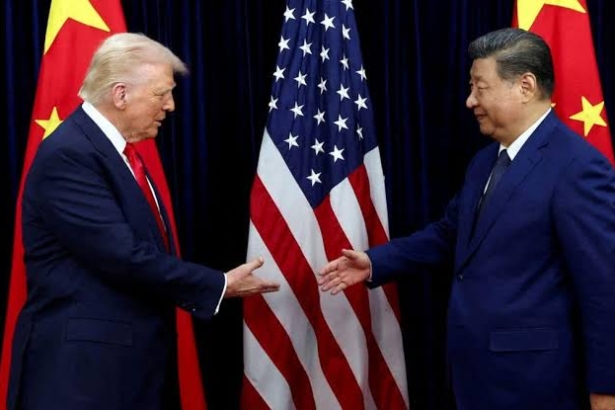
Trump and Xi are scheduled to meet at the White House on Thursday, followed by a state dinner attended by senior officials and corporate executives from both countries. The White House, the Commerce Department, the Office of the US Trade Representative and the Chinese embassy in Washington did not respond to requests for comment ahead of the meeting.
Washington has not gone entirely quiet on China in recent months, but analysts note the measures it has taken land well short of the threats that preceded earlier summits, and officials appear to have timed them deliberately to avoid provoking Beijing just before the meeting. The Pentagon accused Alibaba, BYD and other Chinese firms in June of assisting the Chinese military, and Treasury Secretary Scott Bessent warned in July that any Chinese artificial intelligence company found copying US models could face sanctions. That same month, Washington barred imports from 43 Chinese companies over alleged human rights abuses and blocked imports of new foreign robots and power inverters in measures aimed at China.
Peter Harrell, who served as a White House official under former President Joe Biden, said the administration appears intent on keeping tensions at a manageable simmer rather than letting them boil over into retaliation from Beijing. He said the fallout from last year’s rare earth dispute left the administration feeling exposed to Chinese pressure and now focused on securing stable access to critical minerals rather than picking new fights.
The pattern of escalation before summits followed by de escalation afterward has defined the US China relationship since Trump’s first term. During his 2019 meeting with Xi in Osaka, Trump backed away from threatened tariffs on 300 billion dollars of Chinese goods and eased restrictions on telecoms company Huawei after Beijing agreed to purchase an unspecified quantity of American agricultural products. Roughly a year ago, at a meeting in Busan, Trump lowered tariffs by 10 percent and suspended export controls affecting thousands of Chinese firms after Xi agreed to pause rare earth restrictions and resume buying American soybeans, a deal both governments described as a success at the time.
That restraint did not hold consistently. Ahead of a May meeting with Xi in Beijing, Trump threatened a new 50 percent tariff on Chinese goods following reports that Beijing was preparing to supply air defence systems to Iran. Republican Representative John Moolenaar, who chairs the House committee focused on China policy, said Trump enters this week’s summit from a position of strength.
Dmitri Alperovitch, who co-founded the cybersecurity firm CrowdStrike and now leads the Silverado Policy Accelerator think tank, said he expects Washington to maintain a cautious posture until it develops alternative sources of critical minerals outside China. Speaking at an event last week on US China competition, he described the current dynamic as an uneasy truce that has held since the Busan meeting and is likely to continue.
The dynamic illustrates a broader structural shift in the US China rivalry, where economic leverage tied to physical supply chains has begun to constrain diplomatic posturing in ways that tariffs alone once did not. As Washington works to diversify its mineral sourcing through new mining and processing investments at home and among allied nations, that effort remains years from significantly reducing American dependence on Chinese supply, leaving Beijing with considerable room to shape the terms of engagement at high level meetings for the foreseeable future.
We welcome your contributions! Submit your blogs, opinion pieces, press releases, news story pitches, and news features to opinion@minutemirror.com.pk and minutemirrormail@gmail.com