Summary
- The Shuikousi Overpass in Guiyang, China, has become a subject of global attention because of the unique residential development built around and beneath it.
- As many major cities around the world struggle with rising property prices, overcrowding, and a shortage of available land, Guiyang’s approach demonstrates how creative urban planning can transform overlooked areas into useful spaces.
- As populations continue to grow and cities face increasing pressure on available land, projects like the Shuikousi Overpass may inspire future solutions around the world.
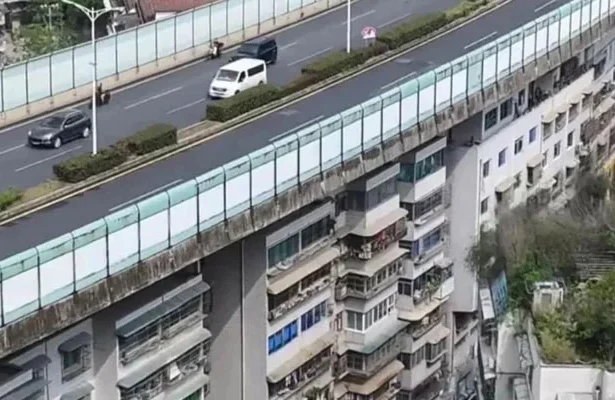
The Shuikousi Overpass in Guiyang, China, has become a subject of global attention because of the unique residential development built around and beneath it. Originally constructed in 1997, the overpass represents an unusual approach to solving the challenges of urban housing in a rapidly growing city.
Located near the center of Guiyang, the overpass is part of an innovative effort to provide affordable housing for low-income and middle-class residents. Instead of expanding the city outward into new suburban areas, local authorities chose a different path. Faced with limited land availability in the urban core, they decided to make use of previously neglected spaces beneath and around the elevated road structure.
As many major cities around the world struggle with rising property prices, overcrowding, and a shortage of available land, Guiyang’s approach demonstrates how creative urban planning can transform overlooked areas into useful spaces. The land beneath the Shuikousi Overpass was once considered unusable because of its location and the noise generated by passing vehicles. However, city planners saw potential in this space and explored ways to turn it into a functional residential area.
The project reflects a broader trend in modern urban development: making better use of existing infrastructure rather than constantly expanding city boundaries. By utilizing land that was already occupied by transportation facilities, authorities were able to create additional housing opportunities without requiring large amounts of new construction land.
The residential area surrounding the Shuikousi Overpass is unusual because it combines transportation infrastructure with everyday living spaces. Homes, shops, and community facilities were developed in close proximity to the overpass, creating a distinctive urban environment. While such a design may appear surprising, it highlights the importance of adapting cities to the needs of their growing populations.
The project also raises interesting discussions about the future of urban living. As cities become more crowded and land becomes increasingly expensive, architects and planners are searching for alternative solutions. Repurposing spaces beneath bridges, highways, and other large structures could become a practical option in areas where traditional land development is difficult.
Although living near an overpass presents challenges, such as noise and traffic concerns, modern construction techniques can help reduce these problems. Soundproofing, improved building materials, and careful planning can make these spaces more comfortable and suitable for residents.
The Shuikousi Overpass development has gained international interest because it challenges traditional ideas about where and how people can live. Instead of viewing infrastructure spaces as empty or wasted areas, Guiyang’s planners demonstrated that these locations can be transformed into valuable parts of a city.
This unique example from China shows how innovative thinking can address urban housing problems. As populations continue to grow and cities face increasing pressure on available land, projects like the Shuikousi Overpass may inspire future solutions around the world. It serves as a reminder that creative planning and efficient use of space can help build more inclusive and sustainable urban environments.
We welcome your contributions! Submit your blogs, opinion pieces, press releases, news story pitches, and news features to opinion@minutemirror.com.pk and minutemirrormail@gmail.com