Summary
- He said that encroachments, illegal constructions, high-rise buildings, lack of green spaces, pollution and unplanned urban expansion have caused temperatures in Karachi to feel much higher than actual levels.
- The former administrator of Karachi stated that over the past 25 years, the city’s population has increased from around 10 million to nearly 25–30 million leading to unplanned expansion and replacement of green areas with concrete and asphalt.
- He added that if immediate attention is not given to afforestation, green belts, better urban planning and eco-friendly policies, extreme heat in Karachi could become a permanent threat in the future.
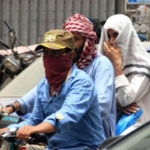
Karachi – The transformation of the city of Karachi into a “concrete jungle” is a serious reality and one of its most devastating effects is extreme heat and a significant rise in temperature. Former Administrator of Karachi Fahim uz Zaman drew viewers attention to the main causes of rising heat in the city.
He said that encroachments, illegal constructions, high-rise buildings, lack of green spaces, pollution and unplanned urban expansion have caused temperatures in Karachi to feel much higher than actual levels.
He warned that the city is rapidly turning into an “urban heat island,” where concrete buildings and roads absorb heat during the day and release it at night resulting in consistently higher temperatures.
He added that even if the actual temperature is 37 to 40 degrees Celsius, due to humidity and urban structure it can feel like 45 to 48 degrees Celsius.
The former administrator of Karachi stated that over the past 25 years, the city’s population has increased from around 10 million to nearly 25–30 million leading to unplanned expansion and replacement of green areas with concrete and asphalt.
He said that in the past, Karachi had abundant parks, playgrounds and trees but today it is difficult to find trees in most areas. Trees such as jamun, neem, banyan, guava and gulmohar which once defined the city are now disappearing.
Faim uz Zaman noted that climate change is affecting cities around the world and developed societies take proactive measures to address these challenges whereas urban planning and environmental protection continue to be ignored in Karachi.
He further said that a city’s master plan acts as a social contract between citizens and authorities but unfortunately it has not been consistently implemented in Karachi over different periods resulting in unplanned construction and environmental problems.
He added that if immediate attention is not given to afforestation, green belts, better urban planning and eco-friendly policies, extreme heat in Karachi could become a permanent threat in the future.
He emphasized the need for large-scale tree plantation saying that the most effective solution to heat is only and only massive afforestation.
We welcome your contributions! Submit your blogs, opinion pieces, press releases, news story pitches, and news features to [email protected] and [email protected]