Summary
- Four major Pakistani oil refineries have formally signed agreements with the government to modernise their facilities, improve fuel quality and increase production under the Brownfield Petroleum Refining Policy 2026.
- Once the upgrades are completed, refineries will be required to maintain crude oil stocks equivalent to at least 14 days of their production capacity.
- The policy requires refineries and oil marketing companies to establish supply agreements for major products, including petrol and high-speed diesel, to help maintain a stable petroleum supply chain We welcome your contributions!
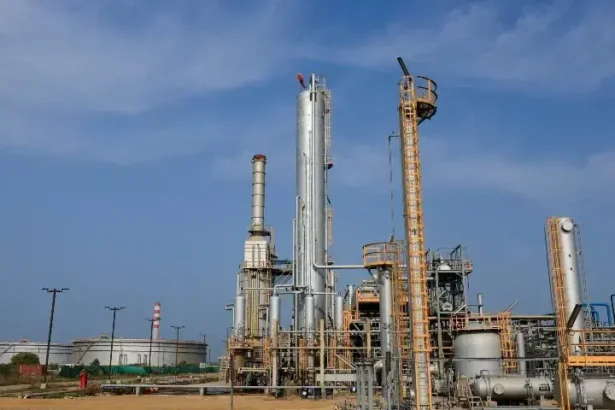
Four major Pakistani oil refineries have formally signed agreements with the government to modernise their facilities, improve fuel quality and increase production under the Brownfield Petroleum Refining Policy 2026.
The agreements involve Attock Refinery, National Refinery, Pakistan Refinery and Cnergyico Petroleum. The Inter State Gas Company (ISGC), a subsidiary of the petroleum division, has also signed the agreements and will oversee their implementation.
The four projects are expected to attract around $5 billion in investment over the next five years. The fifth major refinery, Pak Arab Refinery Company (PARCO), has not yet signed an agreement as it considers its existing technology relatively modern.
Officials said the total investment could rise to around $6 billion if PARCO eventually joins the upgrade programme.
Attock Refinery CEO and Overseas Investors Chamber of Commerce and Industry (OICCI) Energy Committee Chairman Adil Khattak described the agreements as an important development for Pakistan’s refining sector. He said the projects would modernise domestic refining capacity and support the production of cleaner fuels.
According to Khattak, the upgrades are expected to increase production of Euro-V standard fuels, reduce furnace oil output and lower Pakistan’s dependence on imported petroleum products.
He said estimates suggested that modernising the refineries could help the country save around $1.5 billion annually in foreign exchange.
The refining industry has been seeking a comprehensive policy for several years. Work on the first draft began in 2019, while the policy was approved in 2023 and later amended before the government finally approved the current framework in July 2026.
The Cabinet Committee on Energy, chaired by Prime Minister Shehbaz Sharif, approved the Brownfield Petroleum Refining Policy on July 28.
Under the policy, existing refineries are required to upgrade and expand their facilities to improve fuel quality, increase production and change their product mix. The objective is to produce more petrol and high-speed diesel while significantly reducing furnace oil production.
After the planned upgrades, petrol production is projected to rise by 72% to around 18,400 tonnes per day from approximately 10,700 tonnes. High-speed diesel output is expected to increase by 39% to 29,520 tonnes per day from 21,240 tonnes.
At the same time, furnace oil production is projected to fall by 63%, from around 15,417 tonnes per day to 5,714 tonnes.
The upgraded facilities will be required to produce environmentally cleaner fuels meeting Euro-V specifications. Under Euro-V standards, petrol and diesel can contain a maximum of 10 parts per million of sulphur, compared with higher limits under older Euro-IV and Euro-III standards.
The policy also provides several incentives to encourage investment. These include tariff protection on imported petrol and diesel, customs-related benefits and mechanisms to support the import of machinery required for refinery upgrades.
Refineries will receive a 10% tariff protection or deemed duty on the ex-refinery price of motor gasoline and diesel for seven years, subject to the conditions set under the policy.
A portion of the incentives will be placed in joint escrow accounts maintained by the refineries and the Oil and Gas Regulatory Authority (Ogra). The funds will specifically support the implementation of the upgrading projects.
The policy also provides mechanisms for reimbursing certain customs and sales tax-related costs through the Inland Freight Equalisation Margin (IFEM).
Once the upgrades are completed, refineries will be required to maintain crude oil stocks equivalent to at least 14 days of their production capacity. Refineries dependent on imported crude will also have to maintain an additional five days of crude supply at sea.
The refineries will be permitted to sell their petroleum products to any Ogra-licensed oil marketing company. They may also export surplus products, subject to regulatory approval and domestic demand requirements.
The policy requires refineries and oil marketing companies to establish supply agreements for major products, including petrol and high-speed diesel, to help maintain a stable petroleum supply chain
We welcome your contributions! Submit your blogs, opinion pieces, press releases, news story pitches, and news features to opinion@minutemirror.com.pk and minutemirrormail@gmail.com