Summary
- As companies around the world race to develop smarter robots, thousands of workers in India are playing a key role by recording simple everyday activities that could one day be performed by machines.
- These recordings are then used to train artificial intelligence systems designed to help robots understand and imitate human movements.
- Despite concerns about automation, industry leaders argue that robots will not completely replace human workers.
As companies around the world race to develop smarter robots, thousands of workers in India are playing a key role by recording simple everyday activities that could one day be performed by machines.
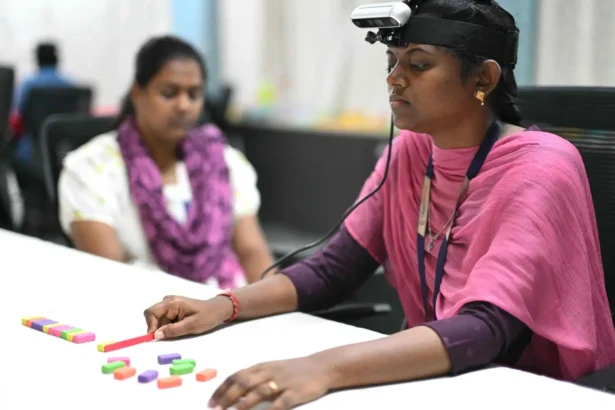
In homes, factories and specialised studios, people are wearing cameras attached to their heads and bodies while carrying out routine tasks such as folding clothes, making coffee, preparing sandwiches and organising household items. These recordings are then used to train artificial intelligence systems designed to help robots understand and imitate human movements.
One of those contributors is 25-year-old Nagireddy Sriramyachandra from Chennai. Using a smartphone mounted on her head, she films herself performing household chores and uploads the footage through a specialised application. For every hour of recording, she earns around 250 Indian rupees, which is slightly more than two US dollars.
She believes the work is worthwhile and even imagines a future where robots may help her with daily responsibilities. For now, her simple kitchen tasks are becoming valuable training material for some of the world’s largest technology companies.
Unlike chatbots and image generators that learn from vast amounts of online information, robots must understand how to interact with the physical world. Developers believe that first-person videos, known in the industry as egocentric data, provide crucial information about human behaviour and movement. By analysing this footage, AI models can learn how to perform practical tasks more naturally.
The recordings are collected by companies such as Objectways, which operates in both India and the United States. The company works with major global clients and provides data that supports the development of machine learning systems. According to company executives, clients frequently request videos showing everyday activities that robots may eventually be trained to perform independently.
The growing demand for such data reflects the rapid expansion of the humanoid robotics industry. Analysts predict that robots will become increasingly common in workplaces and commercial settings over the coming decades. Supporters of the technology argue that automation could free people from repetitive work and allow them to focus on more complex and creative tasks.
India has emerged as an important centre for AI data collection and processing. Technology firms are increasingly turning to the country’s large workforce to gather the information needed to train advanced systems. Experts believe this trend is likely to continue as demand for realistic training data grows.
However, the rise of automation has also sparked concerns about the future of employment. Policymakers and researchers are examining how artificial intelligence could affect millions of workers, particularly those employed in informal sectors. Government studies have highlighted the need to ensure that technological progress benefits workers rather than replacing them.
Some contributors are already thinking about the long-term impact. In Bengaluru, flower seller Ponni has spent years making garlands by hand. She recently participated in data collection projects by wearing a camera while working. While she welcomed the extra income, she expressed concern that future generations doing similar work may face new challenges if machines begin performing traditional tasks.
Inside dedicated training studios, workers spend hours repeatedly carrying out actions for the camera. Some record dozens of short videos every day while changing positions and surroundings to provide variety for AI systems. Others wear motion sensors on their arms and legs to capture even more detailed information about human movement.
Despite concerns about automation, industry leaders argue that robots will not completely replace human workers. Instead, they believe future workplaces will involve cooperation between people and machines, with humans supervising and managing robotic systems from anywhere in the world. As artificial intelligence continues to advance, India’s growing workforce of AI trainers is helping shape that future one recorded task at a time.
We welcome your contributions! Submit your blogs, opinion pieces, press releases, news story pitches, and news features to [email protected] and [email protected]