Summary
- Iran and Oman have reached an understanding to establish a safe shipping route through the strategically important Strait of Hormuz, Iranian officials said on Saturday.
- Iran has also communicated conditions for returning to negotiations aimed at ending its ongoing conflict with the United States, according to Iranian officials.
- Iranian officials have also said diplomatic efforts are continuing to resolve outstanding issues and return to the Islamabad agreement.
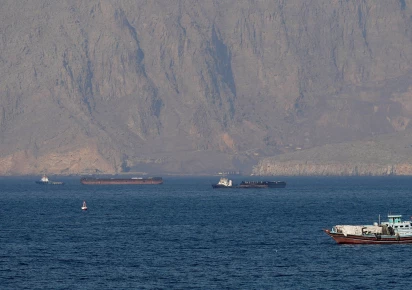
Iran and Oman have reached an understanding to establish a safe shipping route through the strategically important Strait of Hormuz, Iranian officials said on Saturday.
Iranian Foreign Ministry spokesperson Esmaeil Baghaei said the two countries had agreed in principle on a transit route through the waterway. Officials from both sides are continuing discussions on the technical details of the arrangement.
Tehran said the proposed route is intended to facilitate safe maritime movement while protecting the sovereignty and security interests of both Iran and Oman.
The development comes amid heightened tensions in the region and growing concerns over commercial shipping through the Strait of Hormuz, one of the world’s key energy routes.
Iran has also communicated conditions for returning to negotiations aimed at ending its ongoing conflict with the United States, according to Iranian officials. The conditions reportedly include an end to the war on all fronts, the unfreezing of Iranian funds and an end to the naval blockade.
Iranian Security Chief Mohsen Rezaei said discussions with Qatari and Pakistani mediators were continuing and Tehran was awaiting a response from US President Donald Trump.
Meanwhile, Iranian Foreign Minister Abbas Araghchi criticised France over comments by French Foreign Minister Jean-Noël Barrot regarding alleged human rights violations in Iran.
Araghchi accused Paris of overlooking the deaths of Iranian schoolchildren in US strikes and referred to France’s colonial history in Algeria. He called on the French foreign minister to address what Tehran described as a double standard.
A strike on a school in Minab reportedly killed 168 people, including students and teachers, while more than 110 others were wounded. Iranian authorities said the facility was hit by precision missiles.
South Korea has also indicated that it is prepared to make a substantial contribution to international efforts to maintain freedom of navigation in the Strait of Hormuz.
South Korean Foreign Minister Cho Hyun discussed the issue with US Secretary of State Marco Rubio during a meeting in Washington. Seoul said it would contribute to navigation efforts but has ruled out sending combat troops to the waterway.
The two officials also discussed North Korea, regional security and efforts to resume dialogue with Pyongyang. They reaffirmed their commitment to denuclearisation and continued cooperation between the United States, South Korea and Japan.
Trade and investment issues were also discussed. South Korea has committed to significant investment in the United States under a bilateral trade agreement.
Several US military facilities in the Middle East have reportedly suffered significant damage during Iranian attacks, according to images reviewed by US media.
The reported damage includes facilities in Kuwait and Saudi Arabia that host American military assets. An E-3 Sentry surveillance aircraft at Prince Sultan Air Base in Saudi Arabia was also reportedly damaged.
A US military official claimed that repairing some of the affected facilities could take years. Pentagon figures indicate that dozens of American service members have been killed and hundreds wounded since the conflict began.
A Pentagon inspector general report said hundreds of buildings and structures had been damaged. US estimates have placed the financial cost of the war in the tens of billions of dollars.
Iranian officials have also said diplomatic efforts are continuing to resolve outstanding issues and return to the Islamabad agreement.
Interior Ministry spokesperson Ali Zeynivand said international mediation was ongoing. He urged the other side to fulfil its commitments under the agreement.
Zeynivand said the agreement had been approved by Iran’s Supreme National Security Council and confirmed by the country’s supreme leader, making it an official state decision.
Meanwhile, fighting between Yemen’s internationally recognised government forces and Houthi fighters has intensified in several areas.
Yemeni government forces said they had shot down a Houthi drone in Al-Jawf province. Government aircraft also carried out strikes on Houthi positions near Taiz.
Military officials said government forces repelled a Houthi assault in western Taiz and reported casualties among the attackers, although independent verification was not immediately available.
Yemeni officials also claimed that government forces and allied fighters had recaptured several strategic positions following heavy clashes.
The escalation comes as front lines continue to shift across Yemen, particularly around Taiz and the western coast. Fighting has intensified in September after a period of relative calm.
Yemen’s conflict began in 2014 when the Houthis seized Sanaa and expanded their control over large parts of the country. A Saudi-led coalition intervened in 2015 in support of the internationally recognised government.
We welcome your contributions! Submit your blogs, opinion pieces, press releases, news story pitches, and news features to opinion@minutemirror.com.pk and minutemirrormail@gmail.com