Summary
- Israeli officials said those strikes were carried out in retaliation for drone attacks that the armed group Hezbollah had launched against Israeli troops stationed in areas of Lebanon under Israeli occupation.
- Southern Lebanon has borne the brunt of the fighting since tensions between Israel and Hezbollah first escalated, with villages near the border repeatedly targeted in strikes that Lebanese officials say have displaced thousands of residents and caused extensive damage to homes, farmland and infrastructure.
- Lebanese officials have repeatedly called on the international community to hold Israel accountable for strikes that kill civilians, while Israeli authorities maintain that they take steps to minimize harm to noncombatants and that responsibility for civilian casualties ultimately lies with Hezbollah for operating within populated areas.
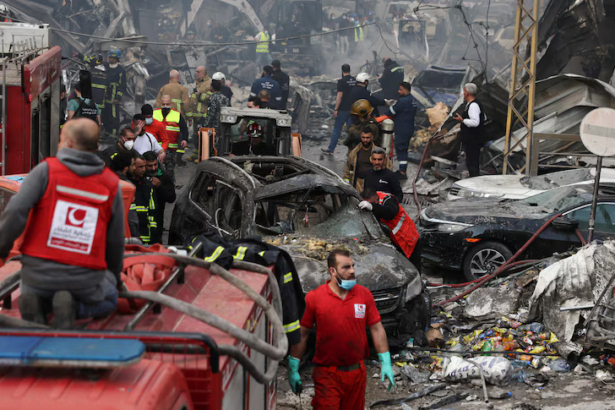
Israeli air strikes targeting a village in southern Lebanon killed at least 11 people, including two children, according to Lebanese state media reports released early Monday.
The National News Agency said nine people died when a strike shortly after midnight destroyed a three story residential building in the village of Kfar Rumman. Rescue workers spent hours searching through the rubble of the collapsed structure in an effort to locate additional casualties, as families in the area gathered to await news of missing relatives. A separate strike on a vehicle killed two paramedics who were responding in the area at the time, the agency reported, raising concerns among local emergency services about the safety of humanitarian workers operating near active strike zones. The Israeli military said it was reviewing the reports but did not immediately confirm operational details of either strike.
The latest deaths follow a wave of Israeli strikes on Sunday that killed seven people elsewhere in southern Lebanon. Israeli officials said those strikes were carried out in retaliation for drone attacks that the armed group Hezbollah had launched against Israeli troops stationed in areas of Lebanon under Israeli occupation. Israeli military officials have repeatedly said in recent weeks that they consider any Hezbollah activity near the border, including drone launches, to be a direct threat that requires an immediate response.
Lebanese President Joseph Aoun described the escalating strikes as a dangerous escalation that threatens to unravel the ceasefire agreement brokered by the United States in June, which had been intended to bring a lasting end to hostilities between Israel and Hezbollah. Aoun’s office said the president had been in contact with international mediators following the overnight strikes, urging renewed pressure on both sides to prevent further deterioration of the truce.
The renewed violence highlights how fragile the ceasefire has remained since it took effect earlier this year, with both sides continuing to trade accusations over repeated violations in the months since the agreement was announced. Hezbollah has maintained that its actions represent defensive responses to continued Israeli military activity inside Lebanese territory, including what the group describes as ongoing surveillance flights and periodic strikes on positions it says pose no active threat. Israel, for its part, has said its operations are necessary to prevent Hezbollah from rebuilding military infrastructure and smuggling routes close to the border, arguing that any pause in enforcement would allow the group to regroup.
Diplomatic efforts to fully stabilize the truce have so far struggled to keep pace with the recurring cycles of strikes and retaliation on the ground. International mediators, including officials from the United States and several European governments, have periodically intervened to try to prevent isolated incidents from escalating into a broader confrontation, though those efforts have yielded only temporary pauses in hostilities rather than a durable resolution.
Southern Lebanon has borne the brunt of the fighting since tensions between Israel and Hezbollah first escalated, with villages near the border repeatedly targeted in strikes that Lebanese officials say have displaced thousands of residents and caused extensive damage to homes, farmland and infrastructure. Humanitarian organizations operating in the region have warned that continued strikes are making it increasingly difficult for displaced families to return to their communities, even in areas nominally covered by the ceasefire.
Lebanese officials have repeatedly called on the international community to hold Israel accountable for strikes that kill civilians, while Israeli authorities maintain that they take steps to minimize harm to noncombatants and that responsibility for civilian casualties ultimately lies with Hezbollah for operating within populated areas. Neither claim has been independently verified in relation to Monday’s strike on Kfar Rumman, and no group had claimed responsibility for the drone attacks that Israel cited as justification for its recent operations.
As of Monday morning, there was no indication that either side intended to scale back operations in the near term, and residents in southern Lebanon reported continued uncertainty over whether the ceasefire would hold in the days ahead.
We welcome your contributions! Submit your blogs, opinion pieces, press releases, news story pitches, and news features to opinion@minutemirror.com.pk and minutemirrormail@gmail.com