Summary
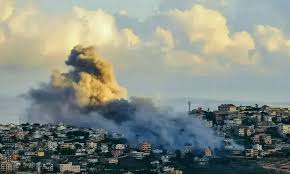
- At least 12 people were killed in a series of Israeli airstrikes across southern Lebanon on Wednesday, according to a Lebanese medical source, as fighting between Israel and Hezbollah showed no signs of easing despite ongoing diplomatic efforts.
- Lebanese authorities estimate that Israeli military operations since March have killed nearly 3,700 people and forced more than one million residents from their homes.
- The latest strikes follow another deadly day of violence in southern Lebanon, where Israeli attacks reportedly killed at least 11 people near the city of Tyre.
At least 12 people were killed in a series of Israeli airstrikes across southern Lebanon on Wednesday, according to a Lebanese medical source, as fighting between Israel and Hezbollah showed no signs of easing despite ongoing diplomatic efforts.
The deadliest attacks were reported in the towns of Tayr Dibba and Deir Qanun al-Nahr, where eight people and four people were killed respectively. Local media said multiple strikes targeted both areas, causing significant damage and adding to the growing toll of casualties in the region.
Israeli military operations also extended to the coastal city of Sidon, an area that has largely avoided major attacks throughout the conflict. A drone strike targeted a vehicle in the city, setting it on fire. Witnesses reported hearing a loud explosion before emergency crews rushed to the scene. Rescue workers later pulled two individuals from the damaged vehicle, though details about their condition were not immediately available.
The latest violence comes amid the collapse of efforts to secure a lasting ceasefire. A truce that was expected to take effect in April was never fully implemented, while a new proposal discussed during talks in Washington last week failed to gain support from Hezbollah. The group rejected the arrangement, arguing that it did not include a complete halt to Israeli military operations in Lebanon.
Since the outbreak of the wider regional conflict, both Israel and Hezbollah have continued exchanging attacks across the border. Hezbollah entered the confrontation in support of Iran, further expanding tensions across the Middle East. Lebanese authorities estimate that Israeli military operations since March have killed nearly 3,700 people and forced more than one million residents from their homes.
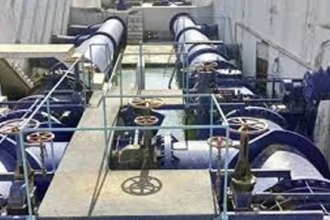
Earlier on Wednesday, another incident heightened tensions when Israeli forces detained two Lebanese men near the border town of Kfarshuba. According to Lebanon’s state news agency, one of the men was a municipal council member while the other worked in the local water sector. The report said both were carrying out maintenance work when they were taken by an Israeli patrol to an undisclosed location.
The Israeli military confirmed detaining two individuals, stating that soldiers identified them near an area where Israeli troops were operating in southern Lebanon. According to the military, the men were transferred for questioning after approaching the zone.
The continuing conflict has placed enormous pressure on communities in southern Lebanon. Several villages remain isolated due to ongoing military activity, while access to healthcare and essential services has become increasingly difficult. Community organisations have urged the Lebanese government to establish safe humanitarian routes to ensure residents can receive medical treatment and emergency assistance.
Concerns have also grown in Christian and Sunni villages near the border, where many residents chose to remain despite repeated warnings and security risks. Local representatives have warned that damaged roads, disrupted services and the closure of health centres have created increasingly difficult living conditions for those who stayed behind.
The latest strikes follow another deadly day of violence in southern Lebanon, where Israeli attacks reportedly killed at least 11 people near the city of Tyre. Israeli forces also issued evacuation notices for several towns, while military operations continued around key areas including Nabatieh and the historic Beaufort Castle region.
As diplomatic efforts struggle to gain momentum, the fighting continues to deepen humanitarian concerns and raise fears of a prolonged conflict that could further destabilise the region.
We welcome your contributions! Submit your blogs, opinion pieces, press releases, news story pitches, and news features to [email protected] and [email protected]