Summary
- officials announced a new ceasefire between Israel and Hezbollah, violence has surged again across southern Lebanon, leaving at least 20 people dead and dozens wounded.
- Netanyahu insists Israel will not withdraw from southern Lebanon, where it occupies around 5% of territory.
- Around a million people remain displaced, and dozens of communities in southern Lebanon have been destroyed.
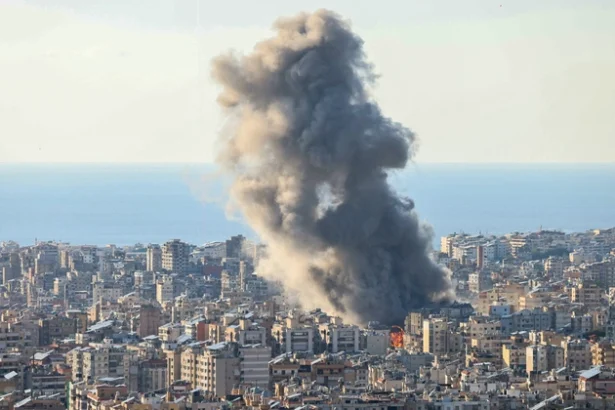
Less than a day after U.S. officials announced a new ceasefire between Israel and Hezbollah, violence has surged again across southern Lebanon, leaving at least 20 people dead and dozens wounded.
Heavy Israeli strikes
Local officials reported that 16 people were killed in Nabatieh district and seven in Saida after Israeli warplanes, drones, and artillery targeted multiple areas. Among the victims was a family of four in Barich. Lebanon’s health ministry said 47 people were killed and 97 wounded in earlier strikes, underscoring the scale of devastation.
The Israel Defense Forces (IDF) said it struck “dozens of Hezbollah terrorist infrastructure sites” in response to more than 50 projectiles fired at Israeli soldiers. The military described Hezbollah’s actions as “repeated and ongoing violations of the ceasefire agreement.”
Hezbollah rejects ceasefire
Hezbollah officials told the BBC they do not recognise the ceasefire announced by Washington. Senior figure Hassan Fadlallah said the group reserved the right to respond to Israeli attacks: “What concerns us is that the enemy fully and comprehensively respects the ceasefire, and doesn’t attempt to attack our country and villages or seek to occupy any new position.”
U.S. concerns
Washington has criticised Israel’s continued operations in Lebanon, warning they could undermine the peace deal signed between U.S. President Donald Trump and Iranian President Masoud Pezeshkian. The agreement calls for an end to hostilities on “all fronts,” including Lebanon. U.S. envoy Steve Witkoff is expected in Switzerland for talks with Iran aimed at cementing the deal.
Netanyahu under pressure
Israeli Prime Minister Benjamin Netanyahu has faced domestic pressure to intensify military action against Hezbollah. He ordered deeper advances into Lebanon after Hezbollah struck northern Israeli communities with drones and rockets. Netanyahu insists Israel will not withdraw from southern Lebanon, where it occupies around 5% of territory.
Humanitarian toll
The consequences of the fighting are stark. Hospitals in southern Lebanon are overwhelmed, with morgues overflowing. At Najdi Hospital in Nabatieh, ambulances bypass the emergency room and head directly to the morgue. Emergency workers say recovery missions now outnumber rescue operations.
Around a million people remain displaced, and dozens of communities in southern Lebanon have been destroyed. Many residents who returned after earlier ceasefires now find themselves caught in renewed bombardments.
Ceasefire in doubt
The ceasefire announced Friday follows several failed attempts since April to halt cross-border strikes. Each truce has quickly collapsed amid retaliatory attacks. Hezbollah vows to continue resistance as long as Israel maintains its occupation, while Israel insists its operations are necessary to protect northern communities.
The U.S.-Iran peace deal was intended to end the wider regional war, but unresolved disputes—Israel’s military presence in Lebanon and Hezbollah’s arsenal—threaten to derail it. For now, southern Lebanon remains the flashpoint, with civilians bearing the brunt of a conflict that shows little sign of abating.
We welcome your contributions! Submit your blogs, opinion pieces, press releases, news story pitches, and news features to [email protected] and [email protected]