Summary
- US Vice President JD Vance said President Donald Trump remains committed to diplomacy and prefers a negotiated settlement over another military confrontation.
- Speaking to reporters, Vance said the US administration would only authorise military action if there was a clearly defined objective and an urgent security need.
- The negotiations are taking place against the backdrop of heightened tensions between Iran, the United States and Israel following months of military confrontations and regional instability.
The United States has signalled that it is not planning to return to military action against Iran unless developments on the ground leave Washington with no other option.
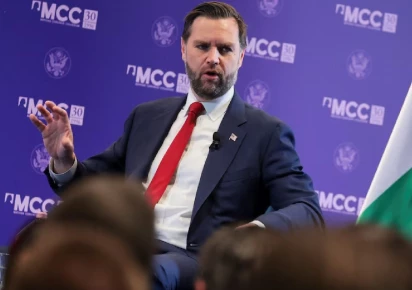
US Vice President JD Vance said President Donald Trump remains committed to diplomacy and prefers a negotiated settlement over another military confrontation.
Speaking to reporters, Vance said the US administration would only authorise military action if there was a clearly defined objective and an urgent security need.
He stressed that Washington wants to give diplomacy every opportunity to succeed.
According to the vice president, talks taking place in Doha have shown encouraging signs and discussions are moving in a positive direction.
He said the US government is participating in negotiations in good faith and hopes the process will lead to a long-term agreement.
However, Vance warned that the American position could change if Iran attempts to rebuild its nuclear programme or threatens commercial shipping routes in the region.
He specifically pointed to the strategic Strait of Hormuz, one of the world’s most important energy corridors.
The vice president said any attack on international shipping or disruption of maritime trade would trigger a strong response from Washington.
Diplomatic contacts between Tehran and Washington are currently being conducted through mediators in Qatar.
The discussions are focusing on sanctions relief, nuclear inspections, maritime security and measures aimed at preventing future military escalation.
Officials involved in the negotiations say technical teams are working to convert broad political understandings into practical agreements.
The talks are also aimed at preserving stability in the Gulf region and restoring confidence between the two sides after months of tensions.
Meanwhile, Iranian officials insist that no direct meetings with American representatives are taking place.
Tehran maintains that all communication with Washington is being conducted through intermediaries and regional partners.
Iranian negotiators have also discussed access to frozen financial assets held overseas.
Officials in Tehran said part of the funds released under recent understandings would be used to purchase essential goods and supplies needed by the country.
Iran’s negotiating team has also supported the creation of an emergency communication mechanism designed to monitor the implementation of agreements and prevent misunderstandings.
President Trump recently expressed optimism about the diplomatic process.
He said negotiations had been productive and described recent contacts as constructive.
According to US officials, Washington is prepared to continue negotiations beyond initial deadlines if progress continues and both sides remain engaged.
At the same time, reports suggest the White House has continued reviewing military contingency plans in case diplomacy fails.
American officials have reportedly discussed possible responses if regional security deteriorates or negotiations collapse.
Despite these preparations, the current priority remains diplomacy.
The negotiations are taking place against the backdrop of heightened tensions between Iran, the United States and Israel following months of military confrontations and regional instability.
Iranian Foreign Minister Abbas Araghchi recently warned that any threat against Iran’s leadership or population would receive a powerful response.
On the other hand, Israeli leaders have maintained that they would continue taking action against any threat they believe endangers their national security.
The coming weeks are expected to determine whether diplomatic efforts can deliver a lasting agreement or whether tensions in the Middle East will rise once again.
Regional governments and international powers are closely monitoring developments, hoping negotiations will reduce the risk of another major conflict in an already fragile region.
We welcome your contributions! Submit your blogs, opinion pieces, press releases, news story pitches, and news features to opinion@minutemirror.com.pk and minutemirrormail@gmail.com