
Summary
- At a time when conviction and recovery rates in high-value crimes remain alarmingly low across the country, District West Karachi Police have bucked the trend by cracking the Rs300 million heist within 3 to 4 days and recovering Rs200 million.
- CRACKDOWN & RECOVERY Bucking the trend of low conviction rates in Sindh, District West Police cracked the case within 3 to 4 days and recovered Rs200 million.
- FUTURE SAFETY MEASURES & STRUCTURAL RESPONSE On future prevention, DIG Balouch said “it is not the mandate of police to audit private security agencies, but the Home Department can take up the matter of making SOPs and audits mandatory”.
KARACHI: The Rs300 million heist recovery in the previous days came against the backdrop of deep public distrust in policing in Sindh, where citizens often choose not to report stolen mobiles, bikes, and even valuables due to fear of misconduct, threats from police personnel, and bureaucratic hurdles. Victims, including senior journalists and traders, complain of a non-friendly police culture where access to even an SP-level officer is treated as a privilege, and complaints frequently go unanswered by higher officials. In many cases, people are deprived of their property and, at times, their lives, with little expectation of justice. This environment has created a wide gap between the police and the public, where reporting a crime is seen as more troublesome than bearing the loss. It is in this context that the swift action by District West Police gains significance.
- SYSTEM FAILURE & THE HEIST
- CRACKDOWN & RECOVERY
- CRIME ANALYSIS & SECURITY LAPSES
- FUTURE SAFETY MEASURES & STRUCTURAL RESPONSE
- REFORMS & PUBLIC MESSAGE
- AN AFTERTHOUGHT
At a time when conviction and recovery rates in high-value crimes remain alarmingly low across the country, District West Karachi Police have bucked the trend by cracking the Rs300 million heist within 3 to 4 days and recovering Rs200 million.
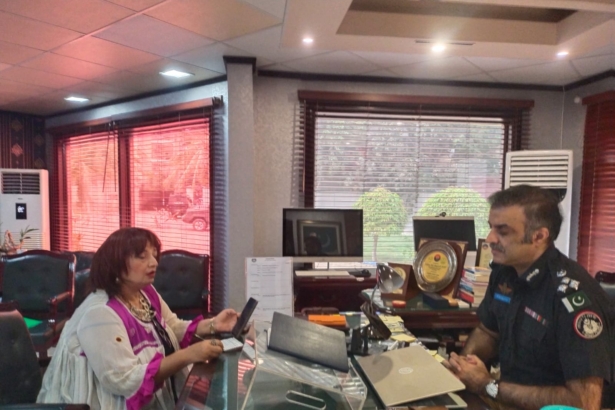
According to DIG West Irfan Balouch, who has previously served as DIG in Larkana, Nawabshah, South Karachi, Islamabad Security, and the Driving License Branch, the case was resolved through rapid intelligence work, technical tracking, and coordinated raids. While police in most districts struggle with delayed investigations and poor recoveries, this operation stands out as a rare example of prompt action and results. The success, DIG Balouch said, came despite major challenges including lack of Safe City CCTV network, cross-district movement, and the fact that it was an inside job. After a thorough investigation, it led to the arrest of three major suspects. Police have rewarded the officers involved and say the operation sends a clear message that organized crime will be pursued with zero tolerance in District West.
SYSTEM FAILURE & THE HEIST
The Rs300 million heist took place on June 12, 2026 in the jurisdiction of Joharabad Police Station, when a cash van of SOS Security Company was transporting the amount to the local bank. According to DIG West Irfan Balouch, the primary responsibility of such security firms is to move cash from company vaults to banks on time, yet standard operating procedures were violated during the delivery. The van’s crew security officer stopped the vehicle for tea, despite clear SOPs that prohibit any halt during cash transit. Dashboard camera footage later showed the main accused, Wajid, handing over vault keys to robbers who arrived in a Vigo. DIG Balouch noted that while security vans are equipped with cameras and vaults, the lack of adherence to protocol made the robbery possible. The incident was reported at 9:30 AM, triggering an immediate police response.
CRACKDOWN & RECOVERY
Bucking the trend of low conviction rates in Sindh, District West Police cracked the case within 3 to 4 days and recovered Rs200 million. Upon taking charge, DIG Balouch informed TFD that he had built a network of private cameras with market traders and shopkeepers because government Safe City cameras have not yet reached District West and Central. After the complaint, he formed a committee of seasoned focal persons deployed at each police station to review footages. Using special software at the DIG Office to clarify images and check criminal history, police traced the suspect Vigo to a lane in Noor Jahan Police Station area. Residents with prior records were shortlisted, leading to the arrest of Ali Langra, from whom the bulk of the recovered amount was seized.
He further added that the gang comprised more than a dozen members, with links to different regions, including Swat and Parachinar. Some suspects are still at large along with a portion of the stolen money. Investigators said the group used multiple number plates on vehicles involved in the robbery and escaped via katcha routes towards Balochistan to avoid detection.
Around 30 to 35 officers were involved in the operation. IG Sindh announced a reward of Rs1 million and one basic pay for each team member, while the security company also offered Rs2.5 million. The remaining Rs100 million is still being traced.
CRIME ANALYSIS & SECURITY LAPSES
DIG Irfan Balouch said the heist reflected a new pattern of intra-provincial organized crime where gangs conduct extensive recce of the targeted bank or company before striking. “They plant their people for an inside job who first win the trust of company management,” he explained. In this case, most of the culprits have fled to Parachinar, an area DIG Balouch described as a hub of sectarian violence that is not easily accessible for Sindh or any other provincial police for raids and operations. He identified major security lapses on the part of the private agency, stating that companies do not conduct heavy background or character checks of guards and prefer hiring at low wages without verification. There is also a lack of proper documentation and SOP compliance during cash transfers. The DIG clarified that while it is not the mandate of local police to force security agencies to undergo audits, such negligence enables crime. He ruled out any money laundering in this case but expressed concern that proceeds from such finance-grabbing crimes could be used for terror financing. However, he asserted that there has been no rise in organized crime in District West or Central due to improved policing and faster response to reported incidents.
FUTURE SAFETY MEASURES & STRUCTURAL RESPONSE
On future prevention, DIG Balouch said “it is not the mandate of police to audit private security agencies, but the Home Department can take up the matter of making SOPs and audits mandatory”. To tackle anti-heist and other serious crimes, he has established a Centralized Investigation Cell, CIC, with 7 specialized units covering heinous, financial, cyber, narcotics, and women and children-related crimes. “Each unit deals in a specialized faculty so they have good experience of dealing with a particular crime,” he said, citing the example of SSIOU which handles domestic violence, rape and child abuse cases.
The DIG stressed the unique challenges of District West and Centre due to their location on the bordering area of Balochistan. “From there smuggling, land grabbing and narcotics peddling are very common,” he said, adding that such areas require border management with coordination from police and other departments like Customs and ANF. He noted that District West was also the most densely populated area of Karachi. To improve performance, he said several steps have been introduced and the Shaheen Force has been engaging actively in area domination patrolling to prevent crimes.
REFORMS & PUBLIC MESSAGE
Learning from the success of cracking this case, DIG West Irfan Balouch outlined three immediate reforms needed to bring down escalating crime rates. First, expedite the Safe City project and install CCTV cameras on priority. Second, revamp the Shaheen Force and make better use of it on the pattern of Punjab’s Dolphin Force. Third, improve the investigation process by constituting specialized investigation police instead of assigning every case to a general IO, so that each officer handles cases of his expertise.
He appreciated the Sindh government’s efforts but stressed the need to invest more in police station infrastructure to make them more people-friendly. He also suggested establishing a Victim Support Service, VSS, at police stations to help complainants track the progress of their cases. To prevent inside-job crimes, he said rigid policies are needed for security agencies, with heavy penalties and cancellation of NOCs and licenses for violations.
AN AFTERTHOUGHT
While interviewing DIG West and observing the way he was managing the district with so many doable ideas, one question remains: why do the people of Karachi still live in an atmosphere of fear, mistrust and despair? The answer is that no cosmetic move or improvement will make the police force people-friendly unless measures are taken to make higher police officers, especially PSP officers, readily available to the masses. “The community will not accept the police force along with its corruption as part of their society until change starts from the top”. “Until CSS-passed officers consider themselves servants, not masters, and until higher authorities who enjoy perks and privileges hold themselves accountable, nothing will change. It is easy to penalize lower staff, but how many of us have seen heads rolling at the higher level?”
In Karachi, even journalists despite their connections and influence do not have access to justice or security. Recently, a photojournalist friend, Asif Jajja, was deprived of his bike parked just before a mosque. He has been raising his voice on all platforms but in vain. How many journalists are being shot or threatened every year? One would see immediate cosmetic moves and statements by police authorities and then it falls on deaf ears. A police wala only protects a police wala, not a citizen. If being a journalist your security is being compromised, so be it. We are there to cover news and many a times to become one.
While the Sindh government invests monetarily to improve the police force, it must also create a mechanism to improve police attitude towards people and bring higher-level authority closer to the public.
We welcome your contributions! Submit your blogs, opinion pieces, press releases, news story pitches, and news features to opinion@minutemirror.com.pk and minutemirrormail@gmail.com