Summary
- North Korea has unveiled and commissioned its largest warship to date, a 5,000-ton destroyer that represents a significant advancement in the country’s naval capabilities and military ambitions.
- For many years, North Korea’s naval strength has been overshadowed by the superior capabilities of neighboring countries, particularly South Korea and the United States.
- According to You Ji-hoon, a research fellow at the Korea Institute for Defence Analyses, the newly commissioned destroyer represents a substantial upgrade from North Korea’s conventional naval structure.
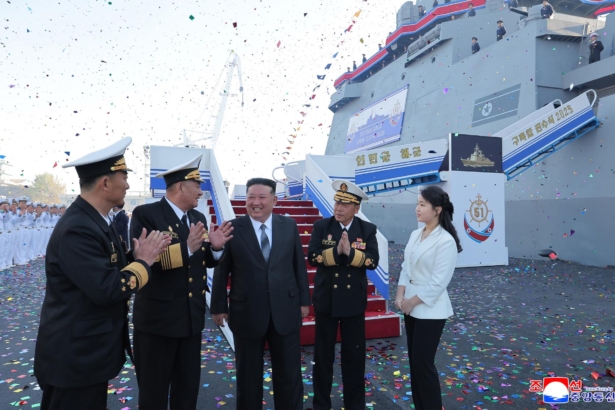
North Korea has unveiled and commissioned its largest warship to date, a 5,000-ton destroyer that represents a significant advancement in the country’s naval capabilities and military ambitions. The launch of the vessel marks a notable milestone for Pyongyang as it seeks to modernize its armed forces and strengthen its position in the region amid ongoing security challenges and geopolitical tensions.
The warship was officially introduced during a ceremony held at the Nampho Shipyard on North Korea’s western coast. Addressing the event, North Korean leader Kim Jong Un described the commissioning of the vessel as a historic achievement for the nation’s navy. He stated that the new destroyer symbolizes a turning point in the development of North Korea’s maritime forces, claiming that it has brought an end to more than seven decades of naval stagnation.
For many years, North Korea’s naval strength has been overshadowed by the superior capabilities of neighboring countries, particularly South Korea and the United States. Both nations operate advanced fleets equipped with modern destroyers, submarines, sophisticated radar systems, and long-range missile capabilities. In comparison, North Korea has traditionally relied on a naval strategy centered on smaller vessels and asymmetric warfare tactics.
According to You Ji-hoon, a research fellow at the Korea Institute for Defence Analyses, the newly commissioned destroyer represents a substantial upgrade from North Korea’s conventional naval structure. He noted that the country has historically depended on coastal defense assets, including submarines, fast-attack craft, coastal artillery batteries, naval mines, and special operations forces. The addition of a larger and more capable surface combatant indicates a shift toward a more modern and versatile naval force.
Kim Jong Un emphasized that the destroyer, named Choe Hyon, is intended to become the foundation of a new generation of North Korean warships. He further asserted that the vessel was designed and built entirely through domestic efforts without any foreign assistance. The claim highlights North Korea’s emphasis on self-reliance and indigenous military development.
However, some experts have questioned whether the project was completed without external support. Leif-Eric Easley, a professor at Ewha University in Seoul, suggested that the speed at which the vessel was constructed may raise questions regarding the extent of foreign technological or logistical assistance involved in the program.
Despite the significance of the launch, military analysts caution that North Korea still faces major obstacles before it can rival the naval capabilities of South Korea and its American ally. Both countries maintain fleets of advanced guided-missile destroyers equipped with cutting-edge combat systems, integrated air-defense networks, and highly sophisticated missile technology.
Nevertheless, the commissioning of the Choe Hyon is being viewed as an important development because it is widely considered North Korea’s first genuine ocean-going warship. Its introduction could alter regional security calculations and raise new concerns regarding the enforcement of United Nations sanctions aimed at limiting the Kim regime’s military expansion.
You Ji-hoon warned that even if the vessel does not meet the standards of a fully modern destroyer, it could still present a significant challenge to South Korean security. He noted that the ship could serve as a platform for launching missiles or be used as a tool for increasing military pressure and escalating tensions during periods of regional instability.
We welcome your contributions! Submit your blogs, opinion pieces, press releases, news story pitches, and news features to opinion@minutemirror.com.pk and minutemirrormail@gmail.com