Summary
- The Pakistan Economic Survey 2025-26 has highlighted a mixed economic performance, showing signs of recovery and stability while revealing that several important macroeconomic targets remained unmet.
- Although the government succeeded in maintaining external sector stability and controlling inflationary pressures, it fell short of its economic growth, investment, and savings objectives.
- The government remains optimistic that continued reforms, policy consistency, and increased private-sector investment will strengthen economic growth and improve employment opportunities in the coming years.
The Pakistan Economic Survey 2025-26 has highlighted a mixed economic performance, showing signs of recovery and stability while revealing that several important macroeconomic targets remained unmet. Although the government succeeded in maintaining external sector stability and controlling inflationary pressures, it fell short of its economic growth, investment, and savings objectives.
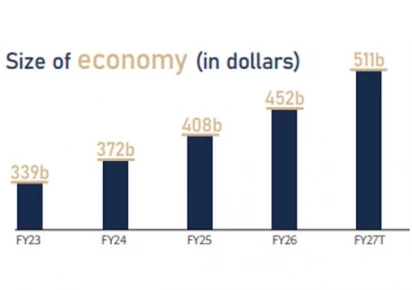
According to the survey, the economy grew by 3.7 percent during the fiscal year, below the government’s target of 4.2 percent. Officials attributed the shortfall to a combination of external challenges, including global trade uncertainties, severe flooding in parts of Punjab, and regional conflict in the Middle East, all of which negatively affected economic activity.
Speaking at the survey’s launch, Finance Minister Muhammad Aurangzeb stated that despite these challenges, Pakistan achieved a broad-based economic recovery. He emphasized that the country’s longstanding fiscal and current account deficits had significantly improved. During the first nine months of the fiscal year, the fiscal deficit remained at 0.7 percent of GDP, while the primary budget balance stayed in surplus. Additionally, the current account recorded a surplus of $72 million, indicating stronger external sector management.
The minister noted that overseas remittances continued to play a crucial role in maintaining economic stability. With around nine million Pakistanis working abroad sending approximately $40 billion annually, remittances remain one of the country’s most reliable sources of foreign exchange.
However, the survey revealed concerns regarding investment and savings levels, both of which remained below government targets. Economists consider these indicators essential for achieving sustainable long-term growth and reducing dependence on borrowing. Similarly, the Federal Board of Revenue (FBR) is expected to miss its annual tax collection target by more than Rs1 trillion despite ongoing reform efforts.
Planning Minister Ahsan Iqbal described declining exports as one of Pakistan’s greatest economic weaknesses. He pointed out that while remittances contribute significantly to foreign exchange reserves, export performance remains inadequate. Comparing Pakistan with Vietnam, he questioned why Vietnam attracts tens of billions of dollars in foreign direct investment annually while Pakistan continues to struggle to secure substantial foreign capital inflows.
The survey also highlighted growing social and economic challenges. Unemployment increased from 6.3 percent to 7.1 percent, with the number of unemployed individuals rising from 4.5 million to 5.9 million. This represents the highest unemployment rate recorded in more than two decades. Poverty levels also worsened, reaching 29 percent, the highest rate in eleven years. Income inequality increased significantly as well, with the national Gini coefficient rising from 28.4 to 32.7, reflecting a widening gap between income groups.
Despite these concerns, the government reported positive developments across key sectors of the economy. Agriculture benefited from continued growth in the livestock sector, which accounts for nearly 60 percent of agricultural GDP. The industrial sector also performed strongly, with large-scale manufacturing expanding by 6.1 percent—the highest growth rate in four years. Out of 22 manufacturing sectors, 16 recorded positive growth.
On the export front, officials acknowledged an overall decline, mainly due to reduced food exports. Rice exports fell by $1.1 billion, while sugar exports declined by $400 million. Nevertheless, the textile industry showed resilience, with notable growth in garment and home textile exports.
The government remains optimistic that continued reforms, policy consistency, and increased private-sector investment will strengthen economic growth and improve employment opportunities in the coming years.
We welcome your contributions! Submit your blogs, opinion pieces, press releases, news story pitches, and news features to [email protected] and [email protected]