Summary
- Islamabad: Pakistan faces heightened economic scrutiny as the Federal Minister for Finance and Revenue, Senator Muhammad Aurangzeb, confirmed in the National Assembly that rising global oil prices continue to pose serious risks to the country’s external sector.
- Sharmila Faruqui, MNA, the Minister outlined that while experts warn a sustained oil shock could cost Pakistan up to 1.5 percent of GDP and create a $12 to $14 billion impact on the external sector if oil reaches $120 to $150 per barrel, the government maintains that impacts so far have been minor and has retained the FY2026 current account deficit target at $2.2 billion.
- The plan envisages a contained current account deficit of $2.1 billion, equivalent to roughly 0.5 percent of GDP, with remittances projected at $39.4 billion.
Islamabad: Pakistan faces heightened economic scrutiny as the Federal Minister for Finance and Revenue, Senator Muhammad Aurangzeb, confirmed in the National Assembly that rising global oil prices continue to pose serious risks to the country’s external sector. Answering a question from Ms. Sharmila Faruqui, MNA, the Minister outlined that while experts warn a sustained oil shock could cost Pakistan up to 1.5 percent of GDP and create a $12 to $14 billion impact on the external sector if oil reaches $120 to $150 per barrel, the government maintains that impacts so far have been minor and has retained the FY2026 current account deficit target at $2.2 billion.
The Minister highlighted that petroleum imports account for roughly one fourth of Pakistan’s total import bill, making the economy highly sensitive to fluctuations in global oil markets. Despite this exposure, the current account for the first nine months of FY2026 recorded a marginal surplus of $8 million, buoyed by an 8.2 percent increase in workers’ remittances to $30.3 billion and a 19.8 percent growth in IT exports, totaling $3.4 billion. In March 2026 alone, the current account registered a surplus of $1.1 billion, even as Brent crude prices averaged $103.7 per barrel.
Senator Aurangzeb emphasized that Pakistan’s external sector position remains broadly aligned with the NEC approved framework in the Annual Plan 2025–26. The plan envisages a contained current account deficit of $2.1 billion, equivalent to roughly 0.5 percent of GDP, with remittances projected at $39.4 billion. Foreign exchange reserves as of April 30, 2026, stood at $21.3 billion, further reinforced by $3 billion in fresh deposits from Saudi Arabia, extensions on previous $5 billion deposits, and successful Eurobond issuances. The Minister confirmed that the IMF EFF program remains on track.
Acknowledging ongoing risks, the Minister noted that the government is actively monitoring oil price volatility and geopolitical developments in the Middle East. A high level committee, under directives from the Prime Minister, has been established to oversee daily petroleum supply, secure additional cargoes, and implement fuel conservation and austerity measures. The government indicated that macroeconomic projections will be updated if prolonged oil shocks materially affect the external outlook, with revisions expected through upcoming APCC and NEC sessions.
On domestic revenue measures, Senator Aurangzeb reported that petroleum levies generated Rs. 1,342 billion between July 2025 and April 2026. These revenues are deposited in the Federal Consolidated Fund and allocated according to National Assembly approved expenditures. Significantly, Rs. 716 billion of the budget has been earmarked for the Benazir Income Support Program in FY2026 to protect vulnerable households.
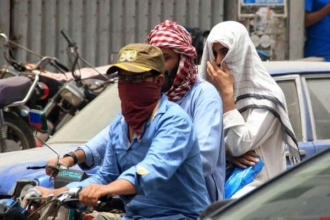
In response to concerns over rising fuel costs, the government has launched an “Energy Relief Plan” to provide targeted subsidies to motorcycles, public freight and transport services, railways, and small farmers. These measures aim to ensure that increased revenue from petroleum levies directly benefits vulnerable populations and is not lost to administrative inefficiencies.
Senator Aurangzeb concluded that despite ongoing global uncertainty, Pakistan’s macroeconomic buffers, including strong remittances, rising IT exports, substantial foreign deposits, and prudent fiscal management, have so far prevented a major economic shock.
We welcome your contributions! Submit your blogs, opinion pieces, press releases, news story pitches, and news features to [email protected] and [email protected]