Summary
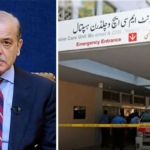
- ISLAMABAD: The federal health secretary was removed from office following the deadly fire in the paediatric intensive care unit (ICU) of Pakistan Institute of Medical Sciences (PIMS), with sources saying the action was linked to an alleged failure to comply with repeated instructions from Prime Minister Shehbaz Sharif to inspect hospitals in Islamabad.
- According to an informed source, the prime minister had repeatedly directed the federal health secretary to personally visit hospitals in the capital, particularly PIMS, and assess the situation on the ground.
- Questions have also emerged over whether additional officials could face disciplinary action following the inquiry, including Federal Health Minister Mustafa Kamal.
ISLAMABAD: The federal health secretary was removed from office following the deadly fire in the paediatric intensive care unit (ICU) of Pakistan Institute of Medical Sciences (PIMS), with sources saying the action was linked to an alleged failure to comply with repeated instructions from Prime Minister Shehbaz Sharif to inspect hospitals in Islamabad.
The fire at the PIMS paediatric ICU resulted in the deaths of 14 children, prompting the government to order a high-level inquiry into the tragedy.
According to an informed source, the prime minister had repeatedly directed the federal health secretary to personally visit hospitals in the capital, particularly PIMS, and assess the situation on the ground.
The inspections were intended to review the quality of medical treatment, availability of facilities and overall arrangements for patients.
The health secretary had also reportedly been specifically instructed to ensure the availability of modern medical equipment and essential electromechanical systems at public hospitals.
However, according to the source, the required visits were not carried out.
The source said the prime minister issued the same directive to the secretary four days before the PIMS incident, but the visit could not take place.
Following the deaths of the children in the ICU fire, the prime minister ordered the secretary’s immediate removal from office.
The source, however, stressed that the decision should not necessarily be interpreted as a final determination of responsibility for the tragedy. The government’s inquiry committee is expected to establish whether administrative or operational failures contributed to the incident.
A high-level committee was constituted to investigate the fire and is expected to submit its findings to the prime minister. As of Friday evening, the report was still awaited.
The inquiry is expected to examine shortcomings at different levels and determine responsibility, after which further action could be taken against officials found negligent.
Questions have also emerged over whether additional officials could face disciplinary action following the inquiry, including Federal Health Minister Mustafa Kamal.
A source said no decision had so far been taken regarding the minister. Any action against him would largely depend on the recommendations of the inquiry committee and whether it holds the federal minister or other senior officials responsible.
The source explained that in cases involving serious administrative failures, senior officials can be removed at an early stage as an immediate administrative response, while further accountability measures are generally considered after the inquiry establishes the facts.
The health minister is also facing pressure from different quarters, with calls for his resignation following the deaths of the children. However, there has been no confirmation that he has been formally asked to step down.
The inquiry report is therefore expected to play a crucial role in determining whether the government takes action against additional officials, including PIMS management and those responsible for administrative and operational oversight.
The tragedy has also raised broader questions about monitoring and safety systems at major public hospitals.
Particular attention is being focused on whether senior health authorities were adequately monitoring critical-care facilities and ensuring that hospitals had functioning safety systems, modern equipment and proper emergency arrangements.
We welcome your contributions! Submit your blogs, opinion pieces, press releases, news story pitches, and news features to opinion@minutemirror.com.pk and minutemirrormail@gmail.com