Summary
- PTI Secretary General Salman Akram Raja has announced that the Pakistan Tehreek-e-Insaf (PTI) will hold a public gathering in Karachi on September 6, using the event to highlight what he described as growing inequality in Pakistan’s education, healthcare and justice systems.
- He said wealthy families could afford better education and healthcare, while poorer citizens often had to rely on under-resourced public institutions.
- The PTI secretary general said the upcoming September 6 gathering would provide the party with an opportunity to raise these issues before the public and call for reforms aimed at addressing inequality and strengthening state institutions.
PTI Secretary General Salman Akram Raja has announced that the Pakistan Tehreek-e-Insaf (PTI) will hold a public gathering in Karachi on September 6, using the event to highlight what he described as growing inequality in Pakistan’s education, healthcare and justice systems.
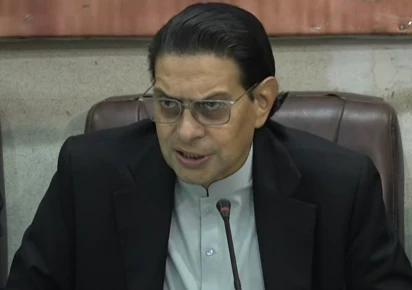
Sphaeaking at a press conference at Insaf House on Thursday, Raja criticised what he called a “two-system” structure in the country, where the wealthy and the poor receive different standards of public services.
Raja also expressed grief over the deaths of 14 newborn babies at the Pakistan Institute of Medical Sciences (PIMS) in Islamabad, describing the incident as a consequence of systemic failure. He questioned whether authorities had learned any lessons from repeated failures within state institutions.
“The deaths of 14 newborn babies at PIMS are an extremely tragic incident,” Raja said, stressing that simply identifying institutional shortcomings would not be enough. He called for fundamental reforms to ensure state institutions provide equal and effective services to ordinary citizens.
The PTI leader argued that Pakistan had gradually developed separate systems for affluent and low-income sections of society. He said wealthy families could afford better education and healthcare, while poorer citizens often had to rely on under-resourced public institutions.
Raja recalled that government schools had provided comparatively better opportunities until the 1980s, when students from different social and economic backgrounds often studied together. He said the rapid expansion of expensive English-medium private schools later widened the gap between children from affluent and less privileged families.
He maintained that the education divide was part of a broader inequality that also affected access to healthcare and justice. According to Raja, the state must work toward a system in which a person’s financial status does not determine the quality of services they receive.
The PTI secretary general said the upcoming September 6 gathering would provide the party with an opportunity to raise these issues before the public and call for reforms aimed at addressing inequality and strengthening state institutions.
We welcome your contributions! Submit your blogs, opinion pieces, press releases, news story pitches, and news features to opinion@minutemirror.com.pk and minutemirrormail@gmail.com