
Summary
- ISLAMABAD: Data presented in the Senate has highlighted a striking difference between the cost of electricity generated by WAPDA and that supplied by private Independent Power Producers (IPPs), raising fresh questions about Pakistan’s power generation structure and the financial burden ultimately borne by consumers.
- Mangla Hydel stood at Rs3.75 per unit, while the average generation cost across WAPDA dams was recorded at Rs5.39 per unit.
- With Tarbela at Rs2.70 per unit, the average cost of WAPDA dams at Rs5.39 and some imported-coal plants above Rs32 per unit, the figures underline the substantial variation in generation costs within Pakistan’s electricity mix.
ISLAMABAD: Data presented in the Senate has highlighted a striking difference between the cost of electricity generated by WAPDA and that supplied by private Independent Power Producers (IPPs), raising fresh questions about Pakistan’s power generation structure and the financial burden ultimately borne by consumers.
According to the figures presented before the Senate, the government paid WAPDA Rs186 billion for 34.5 billion units of electricity, while private IPPs received Rs1,040 billion for supplying 49.8 billion units during the period under review. The figures show that IPPs supplied around 15.3 billion more units but received Rs854 billion more in payments.

The data becomes more significant when individual generation costs are compared. Tarbela Hydel emerged as the cheapest source among the plants listed, generating electricity at Rs2.70 per unit. Mangla Hydel stood at Rs3.75 per unit, while the average generation cost across WAPDA dams was recorded at Rs5.39 per unit.
By comparison, electricity from the Chashma nuclear power plant was listed at Rs6.76 per unit, while locally sourced Thar coal generated electricity at Rs19.03 per unit. Plants using imported coal recorded substantially higher costs, with Port Qasim at Rs32.16 per unit and Sahiwal Coal at Rs34.17 per unit.
The difference between Tarbela and Sahiwal is particularly notable. At Rs34.17 per unit, Sahiwal’s reported generation cost is more than twelve times the Rs2.70 cost recorded for Tarbela. However, generation costs alone do not represent the complete electricity tariff paid by consumers, as transmission, distribution, taxes, adjustments and other charges also contribute to final bills.
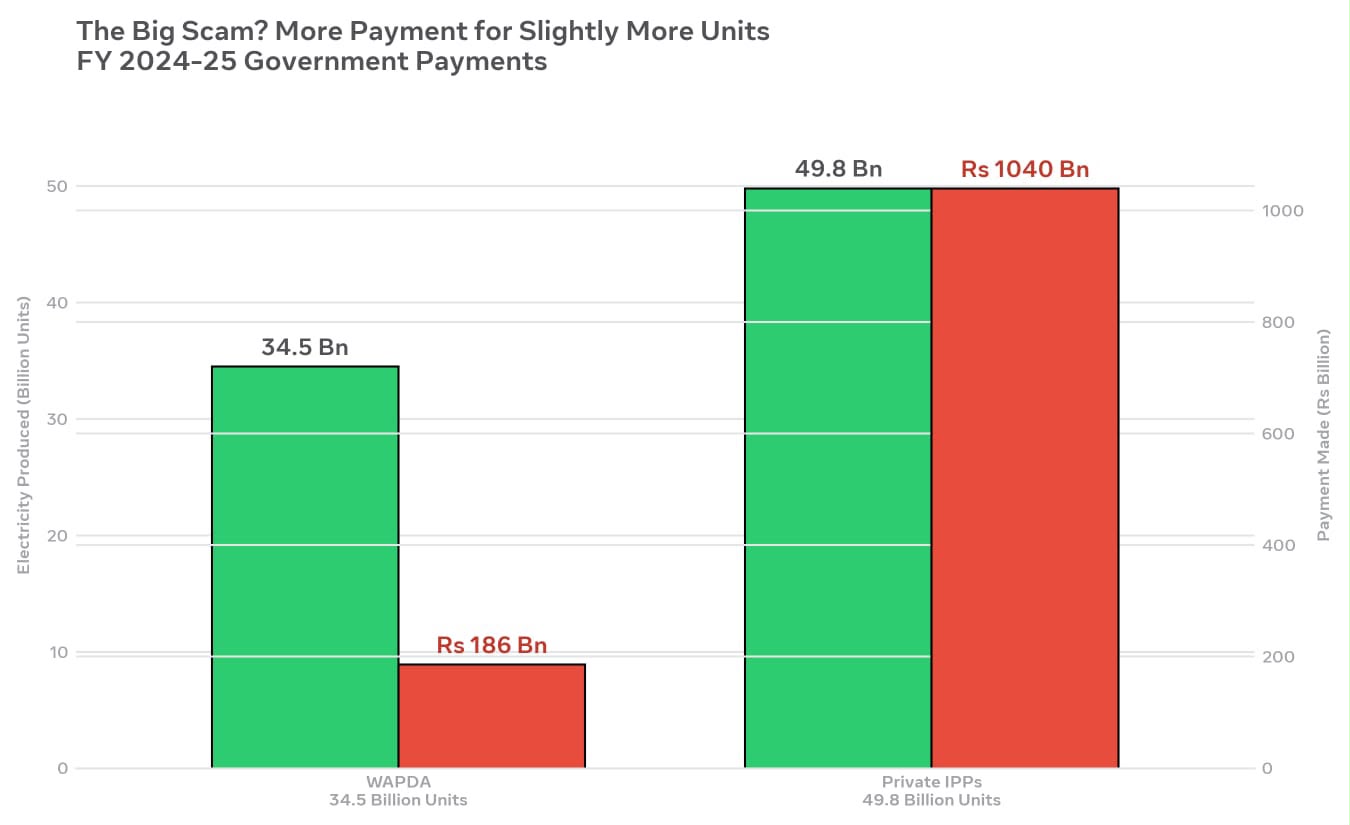
Another major component highlighted in the Senate data is capacity payments. More than Rs1.3 trillion was reportedly paid to IPPs in capacity charges during the current financial year. These payments are linked to contractual arrangements and are separate from the amount paid for electricity actually generated.
The figures have revived debate over Pakistan’s long-term power policy, particularly the balance between hydropower, local fuels, imported fuels and privately owned generation capacity. WAPDA’s official FY2024-25 annual report also records more than 33.5 billion units of net hydel generation during the year, underlining the continuing importance of hydropower in the national electricity system.
For policymakers, the data raises several questions: whether existing power purchase agreements can be made more affordable, how capacity payments can be managed, whether greater reliance can be placed on indigenous energy resources and how additional low-cost generation can be developed.
The Senate figures therefore provide a basis for a broader examination of Pakistan’s power-sector economics. The central issue is not simply how much electricity is generated, but how much the country pays for each unit and how those costs are ultimately transferred to households, businesses and industry.
With Tarbela at Rs2.70 per unit, the average cost of WAPDA dams at Rs5.39 and some imported-coal plants above Rs32 per unit, the figures underline the substantial variation in generation costs within Pakistan’s electricity mix.
We welcome your contributions! Submit your blogs, opinion pieces, press releases, news story pitches, and news features to opinion@minutemirror.com.pk and minutemirrormail@gmail.com