Summary
- Home Secretary Shabana Mahmood signaled she may soften proposed changes to how foreign workers qualify for permanent residence in the UK, following sustained pressure from Labour MPs, cabinet colleagues and trade unions who argue the plans go too far.
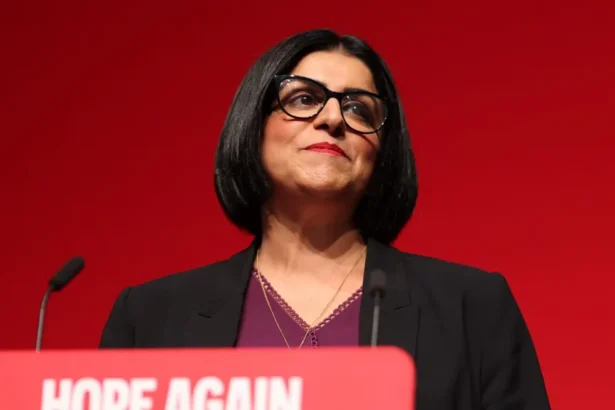
- Speaking at Labour’s annual party conference, Mahmood acknowledged that some critics view elements of the proposed reforms as unfair, telling delegates the government intends to reach a position that balances fairness for people who entered the country legally with fairness toward British citizens.
- A Conservative spokesperson said Mahmood had caved to pressure from Rayner and what the spokesperson called her open borders allied MPs, and accused the government of preparing to abandon its own reform plans, calling the shift a slap in the face to British taxpayers who would end up subsidizing low skilled, low wage migrant workers.
Home Secretary Shabana Mahmood signaled she may soften proposed changes to how foreign workers qualify for permanent residence in the UK, following sustained pressure from Labour MPs, cabinet colleagues and trade unions who argue the plans go too far.
Speaking at Labour’s annual party conference, Mahmood acknowledged that some critics view elements of the proposed reforms as unfair, telling delegates the government intends to reach a position that balances fairness for people who entered the country legally with fairness toward British citizens. She had not previously conceded ground publicly on the proposals despite weeks of internal party criticism.
Under the current proposal, most migrants would need to wait ten years to qualify for indefinite leave to remain, doubling the existing five year requirement. Migrants who arrived in Britain on health and social care visas would face an even longer wait, up to fifteen years, under the plans as they currently stand. Indefinite leave to remain grants a person the right to live, work and study in the UK without time restriction, along with eligibility to apply for certain benefits.
Housing Secretary Angela Rayner has been among the most vocal internal critics of the proposal. Earlier this year, while serving as a backbench MP, Rayner accused the government of moving the goalposts and described Mahmood’s plans as un-British, criticism she maintained after rejoining the cabinet. Andrea Egan, general secretary of the trade union Unison, said the proposed changes would unfairly penalize overseas care workers specifically, a group central to Britain’s health and social care system.
Home Office officials say no final decision on the immigration rule changes has been made, characterizing Mahmood’s conference remarks as an outline of the principles that will guide her approach rather than a concrete policy shift. In her speech, Mahmood tied the residency reforms to broader changes she has pursued around asylum policy, telling delegates that as the government restores control and fairness to the asylum system, it must apply the same standard to legal migration. She described her approach as fair to those seeking a better life in Britain, as her own parents once did, while also fair to people already living in the country, including British workers and particularly younger citizens. She said the same principle underpins her push to ensure that settled status is earned through a consistent, demonstrated commitment to the country.
The Conservative Party seized on Mahmood’s remarks as evidence she had backed down under internal Labour pressure. A Conservative spokesperson said Mahmood had caved to pressure from Rayner and what the spokesperson called her open borders allied MPs, and accused the government of preparing to abandon its own reform plans, calling the shift a slap in the face to British taxpayers who would end up subsidizing low skilled, low wage migrant workers.
Prime Minister Andy Burnham pushed back on the idea that Mahmood had been forced to abandon her proposals because Rayner considered them un-British, telling broadcaster LBC that the reforms need to strike the right balance. Asked directly whether he stood with Mahmood or Rayner in the internal dispute, Burnham said he supported both of them, adding that a formal consultation process has drawn a range of views, not only from politicians but more broadly, and that the government is now working through that feedback.
The dispute highlights a broader tension within Labour’s governing coalition over how far to tighten immigration policy while maintaining support from trade unions and MPs who represent constituencies reliant on migrant labor, particularly in the care sector, which has faced persistent staffing shortages in recent years. With the consultation process still underway and no final policy confirmed, the coming weeks are likely to determine whether Mahmood’s ten and fifteen year thresholds survive in their current form or are revised further in response to the pressure from within her own party.
We welcome your contributions! Submit your blogs, opinion pieces, press releases, news story pitches, and news features to opinion@minutemirror.com.pk and minutemirrormail@gmail.com