Summary
- According to accounts of the 1971 war, Lt Col Sultan Mahmood was informed that Major General Nazar Hussain, commander of the 16th Infantry Division, had reportedly been abducted in the Pirganj area.
- The account of Lt Col Sultan Mahmood’s bravery was also documented by Indian military officers, including Brigadier Joginder Singh Bakshi and Major General Lachhman Singh Lehl in his book Indian Sword Strikes in East Pakistan.
- In 2012, Indian Army officer Major (Retd) Itebar Singh reportedly wrote to Noman Mahmood, who was then a brigadier, recalling his father’s courage and informing him that Lt Col Sultan Mahmood had been buried with full military honours at Pirganj.
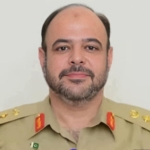
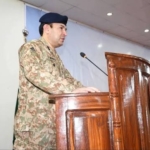
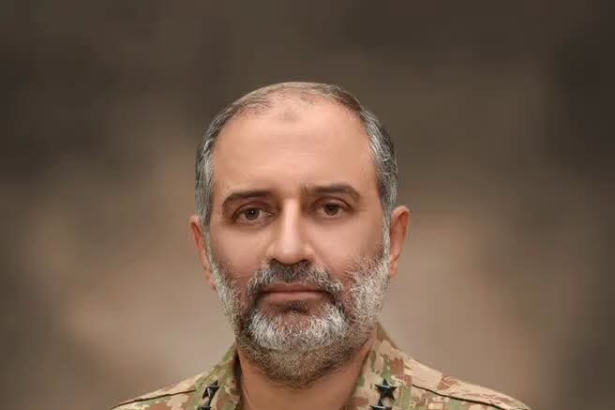
LAHORE/ISLAMABAD: Lieutenant General (Retd) Noman Mahmood has been appointed as the first General Secretary of the Makkah Joint Defence Agreement, marking a significant development in Islamic defence cooperation and linking the new alliance with a distinguished chapter of Pakistan’s military history.
Lt Gen (R) Noman Mahmood is the son of Shaheed Lieutenant Colonel Raja Sultan Mahmood, the commander of 32 Baloch who was martyred on December 7, 1971, in East Pakistan.
According to accounts of the 1971 war, Lt Col Sultan Mahmood was informed that Major General Nazar Hussain, commander of the 16th Infantry Division, had reportedly been abducted in the Pirganj area. He proceeded towards the area with a small group of soldiers to search for his divisional commander but came under attack from Indian forces.
As the fighting intensified, his men were killed one after another. After running out of ammunition, Lt Col Sultan Mahmood reportedly entered an enemy bunker armed with only his pistol and engaged the opposing troops at close quarters.
During the confrontation, he seriously wounded Indian Captain Jatandar Nath Sood, who later died in hospital. Lt Col Sultan Mahmood was subsequently hit by a burst of fire from an Indian Army havildar and embraced martyrdom at the scene.
Accounts of the episode were later published in Indian newspapers and military writings, highlighting the intensity of the battle and the courage attributed to the Pakistani officer.
A plaque at the Baloch Regimental Centre in Abbottabad cites reports from The Hindu describing a Pakistani officer leading a bayonet charge against 2/5 Gorkha Rifles (Frontier Force). The account states that his identity was initially mistaken because of the blood covering his uniform and that his blood-stained epaulettes later identified him as PA-4853 Lieutenant Colonel Raja Sultan Mahmood.
The account further states that during his burial, a Gorkha junior commissioned officer placed Sultan Mahmood’s rank badges into the grave, acknowledging that the fallen officer had been a lieutenant colonel.
Indian press reports subsequently referred to him as the “Sultan of Lieutenant Colonels,” while The Statesman described him in highly complimentary terms.
Around 80 other ranks of 32 Baloch were also reported to have been killed during the action.
The account of Lt Col Sultan Mahmood’s bravery was also documented by Indian military officers, including Brigadier Joginder Singh Bakshi and Major General Lachhman Singh Lehl in his book Indian Sword Strikes in East Pakistan.
In 2012, Indian Army officer Major (Retd) Itebar Singh reportedly wrote to Noman Mahmood, who was then a brigadier, recalling his father’s courage and informing him that Lt Col Sultan Mahmood had been buried with full military honours at Pirganj.
Noman Mahmood was around four or five years old when his father was killed. On September 11, 1987, he joined the Pakistan Army through the Baloch Regiment, following the same military tradition as his father.
During his career, he commanded an infantry division in North Waziristan, served as DG Analysis at ISI and held the position of Inspector General Communication and Information Technology at GHQ. He later served as Corps Commander Peshawar.
In November 2022, while serving as President of the National Defence University, his name was also among those reportedly under consideration for appointment as Chief of Army Staff.
His latest appointment as the first General Secretary of the Makkah Joint Defence Agreement places him in a key position within the emerging framework of Islamic defence cooperation, while also adding another chapter to a military family legacy rooted in the 1971 war.
We welcome your contributions! Submit your blogs, opinion pieces, press releases, news story pitches, and news features to opinion@minutemirror.com.pk and minutemirrormail@gmail.com