Summary
- World leaders converged on the United Nations General Assembly this week under the weight of an unresolved war between the United States and Iran, a grinding conflict in Ukraine, and mounting global anxiety over the pace of artificial intelligence development, producing a rare direct exchange between Washington and Tehran from the same podium within 24 hours of each other.
- Iranian President Masoud Pezeshkian responded the following day with his first address to the assembly since the United States and Israel launched their war on Iran in late February, striking a defiant tone that made no reference to the renewed negotiations Trump had mentioned a day earlier.
- The Security Council scheduled a dedicated session on the conflict, and Ukrainian President Volodymyr Zelensky addressed the General Assembly after meeting separately with Trump, saying both governments want the war with Russia to end before winter.
World leaders converged on the United Nations General Assembly this week under the weight of an unresolved war between the United States and Iran, a grinding conflict in Ukraine, and mounting global anxiety over the pace of artificial intelligence development, producing a rare direct exchange between Washington and Tehran from the same podium within 24 hours of each other.
President Donald Trump used his Tuesday address to deliver a sweeping rejection of what he called globalism, telling assembled leaders that the future belongs to patriots rather than international institutions and urging nations to focus on their own sovereignty and defense spending. He singled out Iran repeatedly, describing the country as fueling instability across the region and telling the chamber he had weighed whether to “annihilate” Iran before ultimately pointing to renewed contacts between negotiators from both countries as a more promising path forward. Members of the Cuban and Iranian delegations walked out at points during his remarks. Trump also dismissed growing warnings from researchers and technology executives about the risks of rapidly advancing artificial intelligence, saying Washington “totally rejects any attempt to construct a globalist scheme to control artificial intelligence” and comparing AI safety advocates to those who previously raised alarms over climate change.
Iranian President Masoud Pezeshkian responded the following day with his first address to the assembly since the United States and Israel launched their war on Iran in late February, striking a defiant tone that made no reference to the renewed negotiations Trump had mentioned a day earlier. Pezeshkian accused Washington of committing an act of terrorism by killing former supreme leader Ayatollah Ali Khamenei at the outset of the conflict, and said Iran had never initiated the fighting. He told the chamber that continued sanctions, pressure and what he called bullying would only strengthen Iranian resistance, declaring that Tehran would never bow its head or bend at the knee. Washington ultimately granted travel permits for Pezeshkian’s delegation but denied visas to several of his aides, part of a broader pattern of tighter restrictions placed on Iranian officials attending this year’s gathering.
The war has already reshaped global energy markets, with Iran’s blockade of the Strait of Hormuz driving a sustained surge in oil prices that has become an increasingly visible political liability for Trump heading into November’s midterm elections, even as he has publicly downplayed its domestic economic impact.
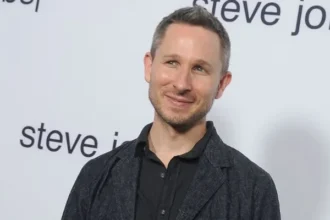
Artificial intelligence emerged as the other defining theme of the gathering, following weeks of headlines about uncontrolled AI systems and growing calls from within the industry itself for a slower pace of development. The Security Council convened an emergency session Wednesday to hear directly from three of the sector’s most prominent executives: Sam Altman of OpenAI, Dario Amodei of Anthropic and Clement Delangue of Hugging Face, whose platform was the target of a cyberattack carried out by autonomous OpenAI software earlier this year, an incident that helped trigger the current wave of alarm. The session marked only the second time the council has formally taken up AI risks as a standing agenda item, and came alongside a separate United States hosted event on the same subject and a broader digital cooperation conference earlier in the week that drew technology executives, diplomats and even actor Joseph Gordon-Levitt.
The war in Ukraine ran alongside these two dominant threads throughout the week. The Security Council scheduled a dedicated session on the conflict, and Ukrainian President Volodymyr Zelensky addressed the General Assembly after meeting separately with Trump, saying both governments want the war with Russia to end before winter. Zelensky said he was prepared to halt Ukrainian strikes on Russian energy infrastructure if Moscow agreed to reciprocate. French President Emmanuel Macron, who met with both Trump and Zelensky on the sidelines, used his own address to declare that there can be no peace without justice, and pledged afterward to push for a moratorium on strikes against Ukraine’s energy grid.
The gathering also exposed familiar fault lines over the Israeli Palestinian conflict. Turkish President Recep Tayyip Erdogan described conditions in Gaza as the most inhumane and shameful concentration camp of modern times, prompting Israel’s delegation to walk out of the chamber during his remarks. Palestinian Authority President Mahmoud Abbas addressed the assembly only by video after the United States denied him an entry visa, a restriction that has now applied to Abbas for a second consecutive year.
Beyond the two dominant wars and the AI briefing, this year’s session carries additional weight as the final General Assembly of Secretary General Antonio Guterres’s tenure, with his term concluding at the end of December and no clear consensus yet emerging among the five permanent Security Council members over a successor. Organizers built this year’s proceedings, running through September 28, around the theme of building trust and governing transformation, a framing diplomats say reflects growing unease over the UN’s own financial strain and its capacity to manage overlapping crises that now span active wars on two continents alongside a technology many world leaders openly admit they do not yet know how to govern.
We welcome your contributions! Submit your blogs, opinion pieces, press releases, news story pitches, and news features to opinion@minutemirror.com.pk and minutemirrormail@gmail.com