Summary
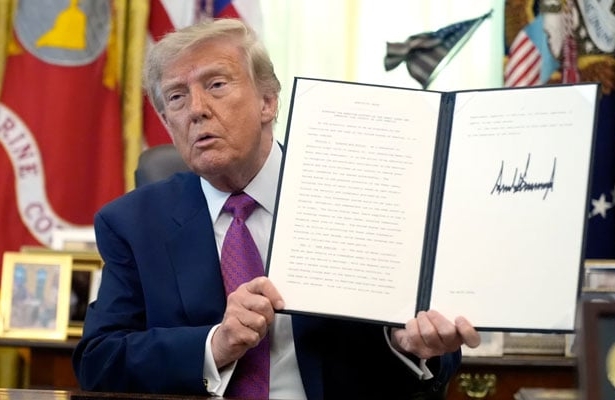
- WASHINGTON: US President Donald Trump has sparked a fresh diplomatic controversy with Canada after reportedly signing an executive order renaming the Ontario Canal as the “Canal America”, adding another unusual chapter to the growing tensions between the two neighbouring countries.
- Carney argued that the waterway’s name predates both the United States and Canada as modern nations and insisted that it would continue to be known as the Ontario Canal.
- New York Governor Kathy Hochul, a Democrat, reportedly said she would not recognise the change, arguing that the waterway’s centuries-old name should not be altered by the president.
WASHINGTON: US President Donald Trump has sparked a fresh diplomatic controversy with Canada after reportedly signing an executive order renaming the Ontario Canal as the “Canal America”, adding another unusual chapter to the growing tensions between the two neighbouring countries.
The move comes after Washington and Ottawa became embroiled in a trade dispute, with relations between the two countries facing renewed pressure.
Referring to his earlier moves involving geographical names, Trump joked that after changing the names of the Gulf of Mexico and the canal, the next step could be to rename the seas as well.
“We changed the name of the gulf and the canal. Maybe the Atlantic and Pacific are next,” Trump was quoted as saying.
The announcement, however, drew an immediate and forceful response from Canadian Prime Minister Mark Carney, who rejected the proposed name change.
Carney argued that the waterway’s name predates both the United States and Canada as modern nations and insisted that it would continue to be known as the Ontario Canal.
The controversy also spilled into US state politics. New York Governor Kathy Hochul, a Democrat, reportedly said she would not recognise the change, arguing that the waterway’s centuries-old name should not be altered by the president.
Vermont Governor Phil Scott, a Republican whose state shares close ties with Canada, also criticised the move, describing it as “demeaning and disappointing.”
According to reports, approximately 52 per cent of the canal lies in Canada, while the remaining portion is located in New York state.

The dispute over the name has added another symbolic flashpoint to already strained US-Canada relations, with Canadian and American officials now facing questions over whether the presidential order can be recognised outside federal jurisdiction.
For Canadians, the issue is about more than a name—it has quickly become another test of national identity and sovereignty.
We welcome your contributions! Submit your blogs, opinion pieces, press releases, news story pitches, and news features to opinion@minutemirror.com.pk and minutemirrormail@gmail.com