Summary
- US President Donald Trump said Sunday that he had entered a critical stage in deciding how Washington would proceed with its conflict with Iran, warning that major developments could follow if Tehran does not change its approach.
- The Khatam al-Anbiya Central Headquarters, the joint military command of Iran’s Islamic Revolutionary Guard Corps, said Tehran had received information that Washington was preparing to resume attacks with backing from some regional states.
- Rezaei said Iranian forces had studied US military vulnerabilities and were better prepared for a renewed confrontation.
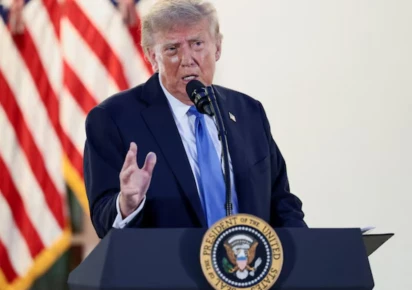
US President Donald Trump said Sunday that he had entered a critical stage in deciding how Washington would proceed with its conflict with Iran, warning that major developments could follow if Tehran does not change its approach.
Speaking to Fox News, Trump said the United States was considering several options, including increasing pressure on Iran or pursuing negotiations. He warned that “very big things” could happen in the near future if the situation remains unresolved.
Trump also indicated that he could be open to diplomatic engagement with Iranian President Masoud Pezeshkian during the high-level week of the United Nations General Assembly, which begins Monday.
The US president also addressed the growing tensions between Yemen’s Houthis and Saudi Arabia. He said Washington remained in contact with the group and claimed that the Houthis had agreed not to engage US forces.
Iran, meanwhile, warned regional countries against supporting any renewed US military action. The Khatam al-Anbiya Central Headquarters, the joint military command of Iran’s Islamic Revolutionary Guard Corps, said Tehran had received information that Washington was preparing to resume attacks with backing from some regional states.
Iranian officials warned that any renewed US strike would trigger retaliation against American bases and interests. They also said countries that assist or facilitate such attacks would be regarded by Tehran as parties to the conflict.
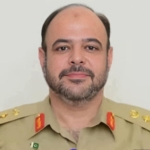
Iran’s Secretary of the Supreme National Security Council, Mohsen Rezaei, accused Trump of continuing what he described as a misguided war. He said Iran was prepared to respond more forcefully if Washington resumed military operations.
Rezaei said Iranian forces had studied US military vulnerabilities and were better prepared for a renewed confrontation. He also argued that prolonging the conflict would increase pressure on Washington.
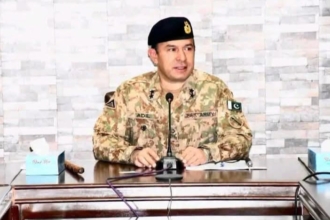
Iranian Army Ground Forces Commander Brigadier General Jahanshahi said border units remained deployed and on high alert in several areas. He said the forces were prepared to respond to potential threats and protect Iran’s territorial integrity.
Iranian Parliament Speaker Mohammad Bagher Ghalibaf said Tehran must be prepared for both military confrontation and diplomacy. He said Iran would use negotiations to consolidate any gains achieved on the battlefield.
Ghalibaf maintained that Iran’s negotiating position was clear and would not be changed. He also reiterated Tehran’s position that the Strait of Hormuz would remain closed until the United States meets its commitments under an earlier peace agreement.
Meanwhile, the conflict has expanded across the region, with Yemen’s Houthis claiming missile and drone attacks against what they described as sensitive targets in Riyadh.
The claims came after flames and a large plume of smoke were seen near Riyadh’s main airport. Saudi authorities had issued overnight warnings about possible aerial threats in Riyadh and the nearby city of Al-Kharj before declaring the situation clear.
The Houthis also claimed to have targeted an Aramco facility in Yanbu, a major Saudi oil-export centre on the Red Sea. They said the attacks were carried out in response to an earlier strike on Yemen’s capital, Sanaa.
The Saudi-led coalition said its air defences intercepted a missile launched towards Riyadh. It also said attacks targeting civilian areas in several Saudi cities had been prevented. The coalition did not immediately provide details about possible damage or casualties.
The escalation has added another front to the wider regional conflict. Fighting between the Houthis and Saudi Arabia has intensified alongside the broader confrontation involving Iran, the United States and Israel.
The United Nations and the Gulf Cooperation Council condemned the Houthi attacks on Saudi Arabia. UN Secretary-General Antonio Guterres and GCC Secretary-General Jasem Mohamed Albudaiwi warned that attacks against civilian sites posed a serious threat to regional peace and security.
The two officials also discussed regional tensions, diplomatic efforts and cooperation between the UN and GCC during their meeting in New York ahead of the UN General Assembly.
Amid the worsening security situation, the United States has also issued a travel warning for Americans considering trips to or through the Middle East.
The US State Department advised citizens to exercise increased caution, citing the possibility of sudden escalation, flight cancellations and airspace closures.
It also warned that US diplomatic facilities and other American interests could face security threats in different parts of the world as tensions involving Iran and groups aligned with Tehran continue to rise.
We welcome your contributions! Submit your blogs, opinion pieces, press releases, news story pitches, and news features to opinion@minutemirror.com.pk and minutemirrormail@gmail.com