Summary
- President Donald Trump has announced a new policy for the Strait of Hormuz, stating that Iranian vessels will face restrictions while cargo ships from other countries will be allowed to pass after paying a 20% security fee.
- In a statement shared on social media, President Trump said the United States would become the “Guardian of the Strait of Hormuz.” According to his remarks, the proposed measures are intended to enhance maritime security while maintaining commercial shipping for countries other than Iran.
- president explained that the 20% charge would be collected to fund the protection and security of commercial cargo transiting the Strait of Hormuz.
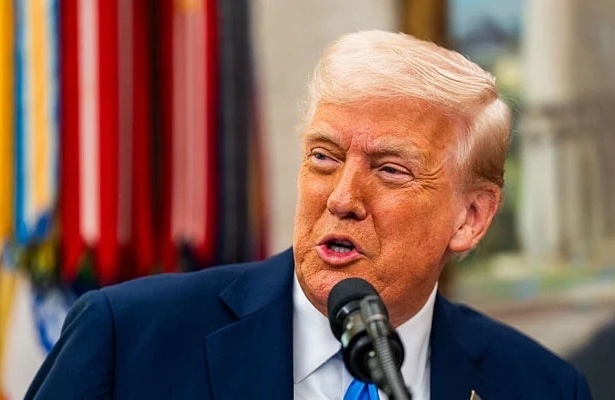
U.S. President Donald Trump has announced a new policy for the Strait of Hormuz, stating that Iranian vessels will face restrictions while cargo ships from other countries will be allowed to pass after paying a 20% security fee. The announcement marks another development in rising tensions surrounding one of the world’s most strategically important maritime trade routes.
In a statement shared on social media, President Trump said the United States would become the “Guardian of the Strait of Hormuz.” According to his remarks, the proposed measures are intended to enhance maritime security while maintaining commercial shipping for countries other than Iran.
Trump stated that the restrictions would apply only to Iranian ships and vessels linked to Iranian customers. He added that cargo ships from all other nations would continue to enjoy access to the waterway, provided they comply with the new security procedures and pay the announced security fee.
The U.S. president explained that the 20% charge would be collected to fund the protection and security of commercial cargo transiting the Strait of Hormuz. He also indicated that implementation of the new policy and enforcement mechanism would begin immediately.
The announcement follows earlier comments by Trump in which he said the United States was seeking to assume a greater role in overseeing security in the Strait of Hormuz. He previously argued that Washington should receive compensation for safeguarding one of the world’s busiest energy shipping routes and suggested that the U.S. could oversee its operations.
Iran responded quickly to the latest announcement. The country’s Khatam al-Anbiya Central Headquarters, the military’s joint operational command, rejected any U.S. involvement in the administration or management of the Strait of Hormuz. Iranian military officials stated that they would not permit foreign interference in the strategic waterway and warned that any U.S. administrative activity conducted without coordination with Iran would face resistance.
The Strait of Hormuz remains a vital global shipping corridor through which a significant share of the world’s oil and liquefied natural gas exports pass each day. Any changes to navigation rules or security arrangements in the area have the potential to affect international energy markets, shipping costs, and regional stability.
Analysts are closely monitoring the situation as governments, shipping companies, and energy markets assess the potential impact of the proposed measures. Whether the announced policy is fully implemented and how other nations respond could play a significant role in shaping future developments in the Gulf region.
We welcome your contributions! Submit your blogs, opinion pieces, press releases, news story pitches, and news features to opinion@minutemirror.com.pk and minutemirrormail@gmail.com