Summary
- For much of the twentieth century Urdu poetry remained connected to larger human struggles.
- The question facing contemporary poetry is therefore not whether it should become political.
- The more important question is whether poetry can continue to ignore the forces shaping human existence.
زندگی کیا ہے؟ زیست کے معنی کیا ہیں ؟
بیٹھیے، تو چلے پتا، کہ مشکل کیا ہے؟ سوچنے
These lines emerged during a casual conversation. They were not intended as poetry. They merely expressed a question that has troubled humanity since the dawn of consciousness: What is life, and what meaning can be assigned to it?
Every civilisation has wrestled with this question. Religions have sought to answer it through revelation. Philosophers have pursued it through reason. Poets have perhaps expressed it most honestly, because poetry is often born where certainty ends.
The Urdu poetic tradition is exceptionally rich in this regard. From Meer Taqi Meer to Mirza Ghalib, from Muhammad Iqbal to Faiz Ahmad Faiz, the central concern has frequently been the human condition—its loneliness, aspirations, failures, contradictions and search for meaning.

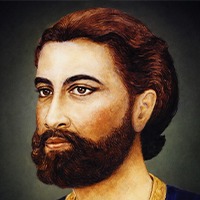

When Ghalib declared:
“بازیچۂ اطفال ہے دنیا مرے آگے”
He was not merely dismissing worldly pursuits. He was exposing the absurdity of human pretensions before the vastness of existence. Human beings imagine themselves masters of destiny while remaining prisoners of forces they scarcely comprehend.
The reflection continued:
“غالب نے کہا، بازیچۂ اطفال ہے دنیا مرے آگے
یوں زندگی بھی میر ہے ، اک تماشا مرے آگے”
The juxtaposition was accidental but revealing. Ghalib’s philosophical detachment and Mir’s emotional intensity represent two enduring streams within Urdu poetry. One seeks understanding through reflection; the other through experience.
Iqbal, who transformed existential inquiry into a call for action, later added a third stream. Human beings were no longer passive observers of fate. They became active participants in history.
Faiz carried this journey further. Personal sorrow merged with collective suffering. Love ceased to be merely romantic. It became political, social and civilisational.
For much of the twentieth century Urdu poetry remained connected to larger human struggles. Colonialism, social injustice, labour exploitation, peasant movements and dreams of emancipation all found expression in verse. The poet was not merely describing reality but interrogating it.
Something changed during the closing decades of the twentieth century. The rise of neoliberalism altered not only economic systems but also human consciousness. Markets gradually replaced communities as organising principles of social life. Competition displaced solidarity. Citizens were transformed into consumers. Success became the supreme virtue and failure a personal defect.
The consequences extended far beyond economics. Human suffering became individualised. Unemployment appeared as personal inadequacy rather than structural failure. Poverty became evidence of insufficient effort rather than unequal distribution of resources. Debt was normalised. Isolation became commonplace.
Contemporary poetry reflects this transformation. Loneliness remains. Anxiety persists. Despair keeps on irritating. What often disappears is the connection between personal suffering and the larger structures that produce it.
The problem, however, runs even deeper than neoliberalism. Erich Fromm in The Anatomy of Human Destructiveness offered one of the most profound analyses of modern humanity and his earlier work Escape from Freedom. Fromm argued that human beings possess not only the capacity for love, creativity and solidarity but also powerful tendencies toward narcissism, destructiveness and submission to authority. The modern crisis is, thus, not merely economic. It is psychological and moral as well.
Human existence is characterised by a perpetual struggle between temptation and restraint. Temptation appears in many forms: wealth without limit, power without accountability, fame without merit, pleasure without responsibility and authority without moral constraints. Few individuals remain entirely immune to these attractions.
Restraint emerges from a different source. It arises from intellectual depth, self-awareness, empathy and moral reflection. The greater the capacity to understand the suffering of others, the weaker becomes the attraction of domination. This conflict has always occupied great poetry.
Mir explored it through grief. Ghalib explored it through doubt. Iqbal explored it through selfhood. Faiz explored it through resistance.
Wilhelm Reich in The Mass Psychology of Fascism examined another dimension of the problem. Reich posed a disturbing question: Why do ordinary people repeatedly submit to authority even when such authority acts against their own interests?
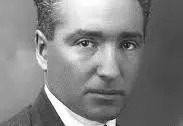
Reich’s answer was that domination possesses emotional appeal. Human beings often admire power rather than justice. They identify with the powerful even when they themselves are victims of power. The observation remains deeply relevant today.
Citizens celebrate rulers who impoverish them. Workers defend systems that exploit them. Consumers embrace lifestyles that intensify insecurity and indebtedness. Entire societies become participants in their own subordination. This phenomenon is visible not only in politics but also in culture and literature.
Much contemporary poetry portrays alienation with remarkable sophistication. Its craftsmanship is often admirable. Its imagery can be dazzling. What frequently remains unexplored is the fascination with power itself.
The tyrant appears as a political figure. Rarely does the poet ask why societies continuously produce admirers of tyranny. The oppressed appear as victims. Rarely do we examine why they often internalise the values of their oppressors.
Classical Urdu poetry recognised this contradiction in symbolic form. The beloved was frequently portrayed as cruel, indifferent and inaccessible, yet endlessly adored. The metaphor was literary. The psychology was real.
The same pattern reappears in economics, politics and social life. Power continues to attract even those whom it injures. During the same reflection another thought emerged:
دیکھوں تو اسے ہے، محض حلقۂ دامِ خیال
کس کی ہوگی بساط، جو سمجھے اس سے آگے
The unfinished nature of these lines may be their greatest strength. Human understanding itself remains incomplete. Every attempt to comprehend existence eventually encounters limits. The question facing contemporary poetry is therefore not whether it should become political. Poetry loses its essence when reduced to slogans.
The more important question is whether poetry can continue to ignore the forces shaping human existence. A civilisation confronting widening inequality, ecological degradation, debt dependency and the growing worship of power requires forms of expression capable of addressing these realities. Pakistan provides a striking example.
Economic life is increasingly shaped by debtocracy. Public policy is frequently subordinated to financial obligations. Political discourse is dominated by power struggles. Social media rewards visibility rather than wisdom. Popular culture often celebrates wealth irrespective of its origins.
One would expect such conditions to generate a powerful poetic response. The response remains surprisingly limited. Existential anguish is abundantly represented. The political economy producing that anguish is seldom examined. The fascination with power is even less frequently explored.
The coming articles under the common main title, ‘Urdu Poetry, Neoliberalism & Worship of Power’ seek to investigate that absence. The next one will examine how the poetry of introspection gradually displaced the poetry of collective consciousness.
Through the works of Majid Amjad, Jaun Elia and Mohsin Naqvi and many others, an effort will be made to explore three distinct responses to the human condition: suffering, self-destruction and resistance.
The discussion will then move beyond literary criticism to examine Erich Fromm’s analysis of destructiveness, Wilhelm Reich’s explanation of power worship and the manner in which neoliberalism transformed citizens into consumers and communities into markets.

The concluding article will return to the question of debtocracy, asking why one of the defining realities of contemporary Pakistan has generated so little poetic response despite shaping the lives of millions.
The objective is neither to condemn contemporary poetry nor to romanticise the past. The purpose is to understand what has changed. The inquiry begins with a simple question:
“زندگی کیا ہے؟ زیست کے معنی کیا ہیں؟”
Perhaps every serious poetic tradition starts there. The more difficult question is whether meaning can be found solely within the self, or whether it also requires understanding the economic, political and psychological forces that shape the self. That inquiry remains unfinished.
_________________________________________________________________
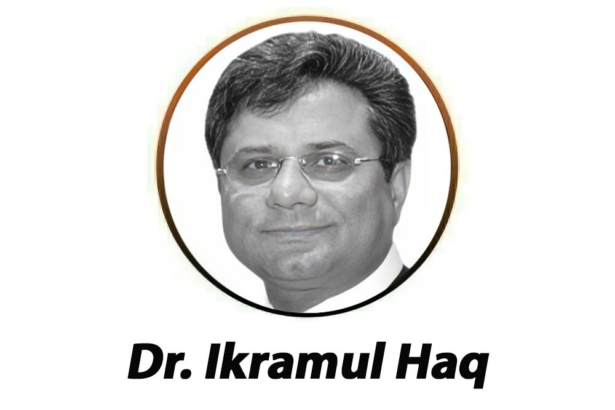
Dr. Ikramul Haq, Advocate Supreme Court, Adjunct Faculty at Lahore University of Management Sciences (LUMS), member Advisory Board and Visiting Senior Fellow of Pakistan Institute of Development Economics (PIDE), holds an LLD in tax laws. He was full-time journalist from 1979 to 1984 with Viewpoint and Dawn. He also served Civil Services of Pakistan from 1984 to 1996.
We welcome your contributions! Submit your blogs, opinion pieces, press releases, news story pitches, and news features to [email protected] and [email protected]