Summary
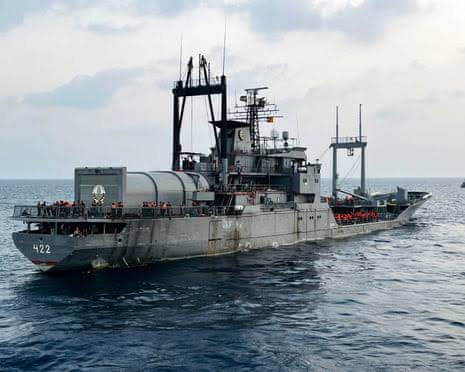
- The recent US attacks on anchored Iranian vessels in Iranian waters have raised concerns about the safety of several Pakistani sailors working on Iranian or Iran-linked commercial vessels in the region.
- Dr Shehzad says several Pakistani sailors are working for Iranian vessels and most of the belong to south Punjab.
- This has raised an important concern: if Pakistani sailors are working on Iranian vessels, they could face risks if attacks on commercial ships continue to increase.
LAHORE: The news of US attacks on Iranian oil tankers had personal connections with Dr Shehzad of Alipur in Muzaffargarh, whose brother is a sailor on an Iranian vessel. The recent US attacks on anchored Iranian vessels in Iranian waters have raised concerns about the safety of several Pakistani sailors working on Iranian or Iran-linked commercial vessels in the region.
The US Central Command (CENTCOM) said American forces struck three Iranian oil carriers on September 5 after Iran’s Islamic Revolutionary Guard Corps (IRGC) allegedly fired ballistic missiles towards two US Navy warships.
According to CENTCOM, the US forces disabled two Iranian oil carriers, M/T Downy and M/T Stark 1. A third vessel, M/T Kylo, also known as Noxen, was destroyed in the Gulf of Oman after its crew was reportedly ordered to leave the ship. Iran later announced retaliatory action against vessels in the region.
The latest exchange has increased risks for commercial shipping in and around the Strait of Hormuz and the Gulf of Oman. Shipping traffic through the strategic waterway has also fallen sharply amid the growing conflict.
Pakistani sailors work on foreign commercial ships in different parts of the world, including vessels operating in the Arabian Sea and the Gulf region. However, there is no comprehensive public data showing how many Pakistani sailors are currently employed on Iranian-owned or Iranian-linked vessels.
Dr Shehzad says several Pakistani sailors are working for Iranian vessels and most of the belong to south Punjab.
Maritime experts say that ships often require crew members and technical staff even when they are not actively sailing. Engineers and other workers may be needed to monitor engines, power systems, generators and other equipment.
This has raised an important concern: if Pakistani sailors are working on Iranian vessels, they could face risks if attacks on commercial ships continue to increase.
Iran has faced international restrictions for many years, and some foreign sailors may be reluctant to work on Iranian vessels because of security concerns and sanctions. This could create employment opportunities for workers from regional countries, including Pakistan. However, the exact number of Pakistani sailors employed on such ships is not publicly known.
The issue is also causing possible concern among the families of Pakistani sailors working in the region.
Families and maritime workers may expect the Pakistani government to closely monitor the situation and collect information about Pakistani citizens working on ships in areas affected by the conflict.
They may also want the government to use diplomatic channels to stress the importance of protecting civilian sailors during military operations.
The growing US-Iran conflict is no longer affecting only military forces. Commercial shipping has increasingly become part of the confrontation, making the safety of international crews an important humanitarian concern.
We welcome your contributions! Submit your blogs, opinion pieces, press releases, news story pitches, and news features to opinion@minutemirror.com.pk and minutemirrormail@gmail.com