Summary
- Islamabad: The ongoing budget session has created an opportunity for informal contacts between the government and the Pakistan Tehreek-e-Insaf (PTI), potentially paving the way for the start of formal negotiations between the two sides.
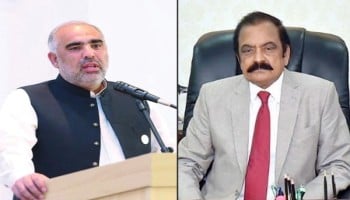
- According to well-informed sources, a series of informal meetings and discussions have been taking place between PTI representatives, particularly Mahmood Khan Achakzai and Barrister Gohar Ali Khan, and key government figures including Rana Sanaullah, Khawaja Asif, and Azam Nazeer Tarar.
- On Friday, Prime Minister Shehbaz Sharif crossed the aisle between government and opposition benches in the National Assembly, where he met opposition leaders and exchanged greetings with Opposition Leader Mahmood Khan Achakzai, PTI Chairman Barrister Gohar Ali Khan, and senior PTI leader Asad Qaiser.
Islamabad: The ongoing budget session has created an opportunity for informal contacts between the government and the Pakistan Tehreek-e-Insaf (PTI), potentially paving the way for the start of formal negotiations between the two sides.
According to well-informed sources, a series of informal meetings and discussions have been taking place between PTI representatives, particularly Mahmood Khan Achakzai and Barrister Gohar Ali Khan, and key government figures including Rana Sanaullah, Khawaja Asif, and Azam Nazeer Tarar.
The latest developments come after Prime Minister Shehbaz Sharif once again appealed for a new Charter of Economy and Charter of Democracy. His call has led to renewed informal engagement between members of the government and the opposition, creating cautious optimism about the possibility of meaningful political dialogue.
While addressing the National Assembly during the budget session, Prime Minister Shehbaz Sharif invited the opposition to sit together in the national interest and develop consensus on important economic and democratic matters. Similar appeals have been made in the past, but attempts to initiate productive negotiations either failed to materialize or were disrupted by changing political circumstances.
The current budget session, however, has provided government and opposition leaders with a chance to interact directly. On Friday, Prime Minister Shehbaz Sharif crossed the aisle between government and opposition benches in the National Assembly, where he met opposition leaders and exchanged greetings with Opposition Leader Mahmood Khan Achakzai, PTI Chairman Barrister Gohar Ali Khan, and senior PTI leader Asad Qaiser.
Sources say the purpose of these contacts is to determine whether a path can be found for serious and structured negotiations between the government and PTI. At this stage, the discussions remain informal and are mainly focused on confidence-building measures and identifying common points that could form the basis of future talks.
Despite these encouraging signs, both sides continue to face significant obstacles. A major challenge for the government would be how to respond if PTI demands the release of former Prime Minister Imran Khan as part of any negotiation process. Government leaders are aware of their limitations and constraints regarding this sensitive issue.
Similarly, PTI also faces internal challenges. Party leaders involved in previous attempts at dialogue have often faced criticism from certain sections of PTI’s social media supporters and overseas party workers, many of whom strongly opposed negotiations with the government and criticized those who advocated political engagement.
The position of Aleema Khan is also being closely observed. In the past, she has publicly expressed views that differed from those supporting negotiations with the government and has criticized certain dialogue efforts.
Despite these hurdles, sources describe the current informal contacts as a positive development. The budget session has created space for direct communication between political rivals, and if these interactions continue, they could eventually lead to a more serious and organized process of negotiations.
For now, both sides are carefully assessing the situation, while informal discussions continue with the hope of creating a favorable environment for meaningful political dialogue in the future.
We welcome your contributions! Submit your blogs, opinion pieces, press releases, news story pitches, and news features to [email protected] and [email protected]