Summary
- Iran and Israel announced on Monday that they had paused their latest wave of strikes, but both sides left open the possibility of renewed attacks, underscoring the fragility of efforts to contain the conflict.
- Iran’s military said its first round of retaliatory strikes on Israel since April was now over, but threatened to resume if Israeli operations in Lebanon continued.
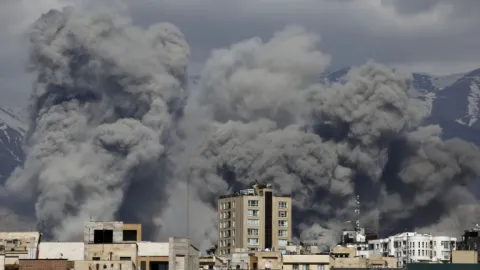
- Israel launched attacks after Iran fired missiles toward its territory late Sunday, which Tehran said were in response to Israeli strikes on Beirut’s southern outskirts.
Iran and Israel announced on Monday that they had paused their latest wave of strikes, but both sides left open the possibility of renewed attacks, underscoring the fragility of efforts to contain the conflict.
Iran’s military said its first round of retaliatory strikes on Israel since April was now over, but threatened to resume if Israeli operations in Lebanon continued. Israel, meanwhile, confirmed through local media that it had halted strikes on Iran at the request of U.S. President Donald Trump, though officials warned that attacks on Hezbollah positions in southern Lebanon would continue “at full strength.”
The developments followed a weekend of intense exchanges. Israel launched attacks after Iran fired missiles toward its territory late Sunday, which Tehran said were in response to Israeli strikes on Beirut’s southern outskirts. Lebanon’s defense minister Michel Menassa reported that Israel had carried out nearly 3,500 air strikes on Lebanon since April 16, flattening villages in the south and displacing more than one million people — a fifth of the country’s population.
Iran’s civil aviation authority announced that all flights across the country were canceled until further notice after closing western airspace, with the exception of flights returning Hajj pilgrims from Saudi Arabia to Mashhad.
Trump, who has sought to broker a deal to end the war, demanded both sides “immediately stop shooting.” Oil prices jumped about 4 percent amid fears that the escalation could derail negotiations.
European Union foreign policy chief Kaja Kallas said in Cyprus that the bloc had imposed new sanctions on Iranian individuals and entities for threatening maritime traffic. The EU has long maintained restrictions on Iran over human rights violations, nuclear activities, and military support for Russia, and in recent months expanded its criteria to include those responsible for blocking the Strait of Hormuz.
The pause in strikes offers a brief respite, but with Hezbollah continuing attacks and Israel vowing to respond, the risk of renewed escalation remains high. Both Tehran and Jerusalem have signaled that the conflict is far from over.
We welcome your contributions! Submit your blogs, opinion pieces, press releases, news story pitches, and news features to [email protected] and [email protected]