Summary
- Iranian Parliamentary Speaker Bagher Ghalibaf also condemned the reported attacks and accused the United States of killing children and civilians in several locations.
- Iranian forces also reported attacks involving explosive drones against facilities at Al Dhafra and Al Minhad in the UAE.
- Kuwait also condemned Iranian attacks on Bahrain and Jordan.
TEHRAN: Iran has warned the United States of a tougher military and diplomatic response after the two sides exchanged their heaviest attacks in weeks, sharply raising tensions across the Middle East.
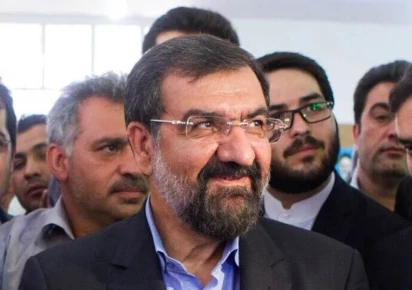
Iran’s Supreme National Security Council Secretary Mohsen Rezaei said Tehran was preparing a new strategy covering the battlefield, diplomacy and efforts to counter economic pressure from Washington.
Rezaei warned that the United States would soon face measures aimed at weakening what he described as its foundations. His remarks came after fresh US strikes against Iranian targets and Iranian attacks on US-linked military positions across the region.
Iranian officials also strongly condemned a US strike on a wedding ceremony in the southern province of Hormozgan. Foreign Ministry spokesman Esmaeil Baghaei described the incident as a war crime and accused Washington of targeting civilians.
Iran’s Red Crescent separately called for an international investigation into the strike. The organisation said the attack on the wedding venue killed four people and injured 67 others. It urged the International Criminal Court to examine the incident under international humanitarian law.
Iranian Parliamentary Speaker Bagher Ghalibaf also condemned the reported attacks and accused the United States of killing children and civilians in several locations.
Meanwhile, Iranian authorities reported the deaths of seven members of the country’s security forces in separate US strikes. Four members of the Islamic Revolutionary Guard Corps Aerospace Force were reportedly killed in Kermanshah, while three Basij members died in an attack on Lavan Island.
The latest confrontation has also raised concerns over the security of the Strait of Hormuz, one of the world’s most important energy routes.
Iran’s Revolutionary Guards said two oil tankers struck sea mines while attempting to pass through the waterway. The Guards claimed the vessels had been using a route that Iran had previously warned was unsafe.
Saudi Arabia’s national shipping company Bahri also reported that two Filipino crew members were killed in a security incident involving one of its vessels while it was travelling through the Strait of Hormuz on August 31.
The company said it remained in contact with the vessel and was coordinating with relevant authorities.
Iran has meanwhile claimed that its forces carried out missile and drone attacks against US-linked positions in Kuwait, Bahrain, the United Arab Emirates, Jordan and Iraq.
The Revolutionary Guards said its forces targeted American facilities at Ali Al Salem Air Base in Kuwait. Iran claimed that US personnel were killed and several drones were destroyed, although Washington had not confirmed the claims.
Iranian forces also reported attacks involving explosive drones against facilities at Al Dhafra and Al Minhad in the UAE. Radar installations and locations associated with US forces at Bahrain’s Sheikh Isa Air Base were also reportedly targeted.
In Iraq, Iran claimed that missile and drone strikes hit US military facilities in Erbil. The Revolutionary Guards said several military installations and equipment were damaged, but the claims had not been independently verified.
Iran’s military leadership has also warned regional countries against allowing their territory to be used by US forces. IRGC political deputy General Yadollah Javani specifically mentioned Kuwait, Bahrain and Jordan, urging them to remove American forces and bases.
The warnings have triggered strong reactions from Gulf states.
Qatar condemned Iranian attacks on neighbouring countries, including Jordan and Bahrain, calling them violations of national sovereignty and international law. Doha urged all parties to stop military operations and return to dialogue.
Kuwait also condemned Iranian attacks on Bahrain and Jordan. It called for de-escalation and stressed the importance of respecting international law and the sovereignty of neighbouring states.
The United States, meanwhile, said its latest military operation targeted Iranian military capabilities, including air-defence systems, radar installations, maritime assets, mine-laying facilities and communications infrastructure.
Iran said it had responded by targeting American positions in the region.
Jordan reported that its air-defence systems dealt with 13 ballistic missiles entering its airspace. Ten were intercepted, while three landed in remote areas. Bahrain also said it intercepted Iranian drones.
The renewed fighting marks a major escalation after a period of relative calm. The latest exchange has raised fears that the conflict could spread further across the Gulf and threaten regional energy supplies.
US President Donald Trump has maintained a tough stance towards Tehran, while Iranian authorities have vowed to expand their response if American attacks continue.
We welcome your contributions! Submit your blogs, opinion pieces, press releases, news story pitches, and news features to opinion@minutemirror.com.pk and minutemirrormail@gmail.com