Summary
- The court ruled that the prosecution failed to prove the allegations beyond reasonable doubt and declared that the convictions could not be sustained on the basis of weak and unreliable evidence.
- The Supreme Court further noted that the judicial confessions attributed to the accused were not corroborated by independent evidence.
- Reaffirming a fundamental principle of criminal justice, the court stated that the benefit of doubt is a legal right of every accused person and must be granted whenever the prosecution fails to prove its case beyond reasonable doubt.
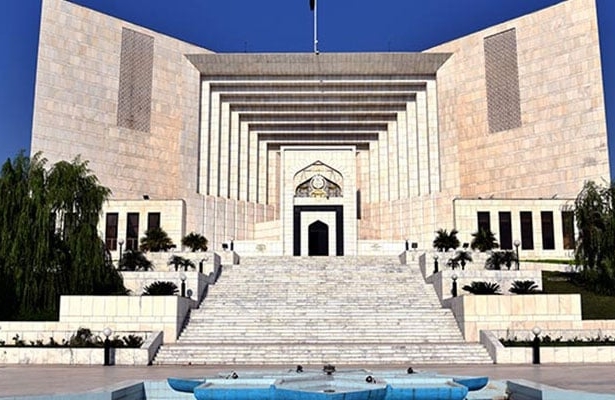
The Supreme Court of Pakistan has issued its detailed judgment in the Baldia Factory tragedy case, acquitting two men who had previously been sentenced to death. The court ruled that the prosecution failed to prove the allegations beyond reasonable doubt and declared that the convictions could not be sustained on the basis of weak and unreliable evidence.
The 39-page verdict was authored by Justice Malik Shahzad Ahmad Khan, with Justice Aqeel Ahmed Abbasi and Justice Shakeel Ahmed concurring with the decision. The judgment carefully examined the evidence presented during the trial and concluded that the prosecution’s case contained serious shortcomings that made it impossible to uphold the convictions.
According to the ruling, the prosecution failed to establish the charges against the accused through credible and independent evidence. The court observed that a new version of events emerged nearly two and a half years after the incident, raising serious questions about its reliability. It emphasized that statements recorded after such a significant delay could not be considered dependable enough to support convictions in a criminal case.
The Supreme Court further noted that the judicial confessions attributed to the accused were not corroborated by independent evidence. It also found that forensic evidence did not support the prosecution’s claim that chemicals had been used to deliberately start the devastating fire. The absence of scientific proof weakened one of the central allegations in the case.
Another major concern highlighted in the judgment was the testimony of witnesses. The court pointed out that none of the 34 injured witnesses who testified during the proceedings identified or implicated the accused in the alleged crime. This lack of direct witness testimony significantly undermined the prosecution’s case.
The bench also criticized the prosecution for failing to produce CCTV footage that could have provided crucial evidence regarding the events surrounding the factory fire. The court stated that the non-production of such important material further weakened the case and left critical questions unanswered.
The judgment stressed that criminal convictions cannot be based on assumptions, speculation, or generalized allegations. Instead, guilt must be established through clear, reliable, and convincing evidence. Reaffirming a fundamental principle of criminal justice, the court stated that the benefit of doubt is a legal right of every accused person and must be granted whenever the prosecution fails to prove its case beyond reasonable doubt.
As a result, the Supreme Court acquitted Muhammad Zubair, also known as “Chariya,” and Abdul Rehman, also known as “Bhola,” ordering their release from the charges for which they had been sentenced to death.
In addition to acquitting the two accused, the Supreme Court directed that judicial remarks made against MQM-Pakistan in previous rulings be removed from the record. The court also set aside the relevant findings of the Sindh High Court and the Anti-Terrorism Court to the extent that they contained those observations.
The detailed judgment marks a significant development in one of Pakistan’s most high-profile criminal cases, reaffirming the importance of credible evidence, due process, and the principle that no individual can be convicted unless guilt is established beyond reasonable doubt.
We welcome your contributions! Submit your blogs, opinion pieces, press releases, news story pitches, and news features to opinion@minutemirror.com.pk and minutemirrormail@gmail.com