Summary
- Artificial intelligence can help developing countries like Pakistan get faster and more useful weather forecasts, allowing health authorities to prepare earlier for heatwaves, disease outbreaks, and other climate-related health risks, according to a new report by the University of Chicago.
- The report, supported by the Rockefeller Foundation, says AI could make locally tailored weather forecasts affordable for low- and middle-income countries.
- Amir Jina, an assistant professor at the University of Chicago Harris School of Public Policy and author of the report, said AI could help make weather forecasting available to more people around the world.
Artificial intelligence can help developing countries like Pakistan get faster and more useful weather forecasts, allowing health authorities to prepare earlier for heatwaves, disease outbreaks, and other climate-related health risks, according to a new report by the University of Chicago.
The report, supported by the Rockefeller Foundation, says AI could make locally tailored weather forecasts affordable for low- and middle-income countries. However, it warns that without planned investment and local support, poorer countries could again be left behind as AI technology develops.
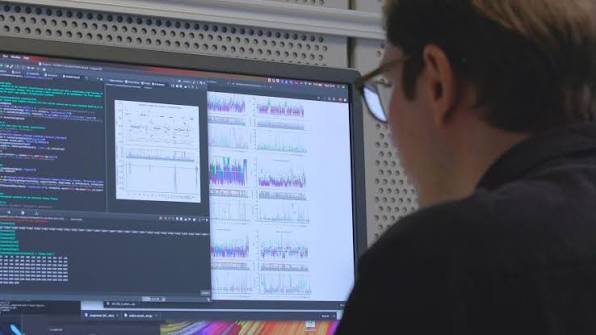
AI is changing the way weather forecasts are produced. The report says modern AI weather models can match or even perform better than some leading physics-based forecasting systems. They can also produce forecasts much faster and at a lower cost.
In the past, producing a reliable 10-day weather forecast required a supercomputer costing around $100 million. A trained AI model can now produce a 10-day forecast in minutes using a single computer chip.
Amir Jina, an assistant professor at the University of Chicago Harris School of Public Policy and author of the report, said AI could help make weather forecasting available to more people around the world.
He said weather forecasts could be designed according to the needs of health officials and meteorologists, helping them make decisions that could protect lives.
The report points to a major gap between weather information and health services. According to the World Meteorological Organization, 81 percent of national meteorological services provide climate services for health. However, only 23 percent of health ministries operate a surveillance system that uses weather information.
The report says the problem is not only a lack of information. Weather forecasts have often not been designed around the decisions health officials need to make.
For example, health authorities may need warnings several weeks before a heatwave or disease outbreak. But many existing forecasting systems provide information only for the next few days or for longer seasonal periods.
The report says two to four weeks of advance warning could help health systems prepare for extreme heat. It could also help malaria programmes decide when to spray against mosquitoes and carry out other measures to control the disease.
A case study from Nigeria shows the problem. During a planning exercise involving different sectors, participants said that most of the actions they wanted to take required warnings several weeks in advance. However, the weather information available to them covered only shorter periods or entire seasons.
Dr Naveen Rao, senior vice president of health at The Rockefeller Foundation, said AI forecasting could help communities facing high climate-related health risks. But he said technology alone would not be enough and that investment in data, training and local institutions would also be needed.
The report gives 22 recommendations under four areas: research, evidence, scaling and sustainability.
It calls for weather forecasts to be tested according to how well they support real health decisions, beginning with extreme heat. It also recommends evaluating whether new forecasting services actually improve health outcomes before they are expanded.
The report further calls for proven climate-health services to be taken to national level and for health needs to be included in national AI and data policies.
It also stresses the importance of local ownership. Countries most affected by climate-related health risks should have the skills and institutions needed to test, adapt and eventually develop AI weather forecasting systems themselves.
Researchers at the University of Chicago are already working with governments in India and Ethiopia to develop weather forecasts based on local needs. The team is also training meteorologists from 30 low- and middle-income countries in AI weather forecasting.
The report was prepared with input from experts in meteorology, public health, climate, technology and social sciences from 20 organisations.
The researchers say AI could close a decades-old gap in access to useful weather information, but only if countries and international organisations take deliberate steps to make the technology available to the communities that need it most.
We welcome your contributions! Submit your blogs, opinion pieces, press releases, news story pitches, and news features to opinion@minutemirror.com.pk and minutemirrormail@gmail.com