Summary
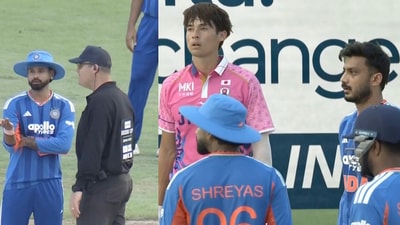
- SANO: India survived a dramatic late scare against Japan on Tuesday, edging the hosts by just two runs in a rain-shortened one-off T20 International after a contentious wide decision was overturned in the final over.
- Japan therefore needed 33 runs from their five overs and began their chase with determination.
- Instead, Japan struggled to find the required runs from the remaining deliveries and eventually finished their five overs at 30 for three, leaving India with a narrow victory.
SANO: India survived a dramatic late scare against Japan on Tuesday, edging the hosts by just two runs in a rain-shortened one-off T20 International after a contentious wide decision was overturned in the final over.
The historic match at the Sano International Cricket Ground was reduced to just five overs per side because of a wet outfield, turning the contest into a tense battle where every delivery carried huge significance.
India, led by Shreyas Iyer, won the toss and elected to bat but struggled to score freely on a slow, turning surface. Japan’s spinners kept the Indian batters under pressure throughout the shortened innings, restricting the world champions to 32 for four.
Iyer was India’s leading scorer with 16, but the visitors were unable to build the kind of imposing total expected from them.
Japan therefore needed 33 runs from their five overs and began their chase with determination. Their disciplined approach put India under unexpected pressure, particularly as the hosts entered the final over needing only eight runs for what would have been a remarkable victory.
Drama in the final over
India handed the ball to Axar Patel for the decisive over, but the situation quickly became tense.
Umpire Chris Thurgate initially signalled wide on deliveries as Japan’s left-handed batter Alexander Shirai-Patmore attempted reverse sweeps.
Patel and wicketkeeper Sanju Samson appeared to disagree with the decision. Indian captain Iyer subsequently approached square-leg umpire Chris Brown, leading to a discussion between the officials.
The second wide call was eventually overturned and the delivery was declared legal.
The decision proved highly significant in a match separated by only two runs. Had the original call remained, Japan would have received an additional run and another delivery, giving them another opportunity to complete the chase.
Instead, Japan struggled to find the required runs from the remaining deliveries and eventually finished their five overs at 30 for three, leaving India with a narrow victory.
Japan push India to the limit
The result prevented what could have been one of the most unexpected upsets in India’s T20 history.
India’s bowlers played a crucial role in defending the modest total. Washington Sundar claimed two wickets for 13 runs, while Axar Patel conceded only seven runs from his two overs.
For Japan, Charlie Hara-Hinze was the standout bowler, taking two wickets for 17 runs.
Despite the defeat, Japan’s performance demonstrated their ability to challenge a far more experienced opponent, particularly on a difficult pitch and in an abbreviated format.
The match was also significant beyond the narrow result, as both sides are using the fixture as part of their preparations for the Asian Games.
India ultimately walked away with the victory, but the two-run margin highlighted just how close the contest became. What appeared to be a straightforward match-up on paper turned into a nail-biting finish, with an umpiring decision in the final over becoming one of the defining moments of the game.
We welcome your contributions! Submit your blogs, opinion pieces, press releases, news story pitches, and news features to opinion@minutemirror.com.pk and minutemirrormail@gmail.com