Summary
- Poetry, Resistance & Humanity will move into the colonial and postcolonial periods.
- Ayaz’s poetry, as one assessment of his resistance writing observes, made love of language and land a force for political awakening. Pashto resistance offers another necessary correction.
- Javed Haider Syed’s study of Baloch resistance literature against the British Raj shows how oral poetry became an alternative archive.
Colonialism never arrived as administration alone. It came with the soldier, surveyor, revenue official and compliant local notable. It measured land, classified communities, redirected labour and converted political submission into an orderly entry in the imperial record.
The record rarely preserved what the conquered felt. That work was often performed by poetry. A ballad could remember a battle that official history reduced to a “punitive expedition”. A song could expose the collaborator whom the file praised as loyal. A verse carried from village to village could preserve a people’s dignity after their weapons had been taken away.
This is the starting point of our new series. The last series, Poetry, Power & Humanity, explored classical voices that challenged possession, hierarchy, exclusion and the worship of power. Poetry, Resistance & Humanity will move into the colonial and postcolonial periods. It will recover poets in Punjabi, Sindhi, Pashto and Balochi whose work confronted empire and the arrangements that survived it.
Resistance, in this inquiry, will not mean anger for its own sake. Nor will every nationalist slogan qualify as liberating poetry. A poem that opposes one ruler while demanding the subordination of another community merely changes the identity of the master. The test is whether resistance enlarges humanity: whether it defends freedom of conscience, equality of persons, the dignity of labour, social justice and the right of every human being to live without subservience.
This distinction matters because empire worked through more than foreign coercion. It depended upon landlords, tribal chiefs, intermediaries, moneylenders and educated functionaries who translated command into local obedience. Its deepest success came when the dominated began to speak its language of superiority and inferiority as if that order were natural.
Erich Fromm helps us identify the resulting civilisation of possession. In To Have or To Be?, he distinguished a life organised around ownership and control from one grounded in human activity, sharing and relatedness. Colonialism represented the having mode at its most extensive. Land, labour, raw material and even human identity became things to be classified, possessed and used.
Jean-Paul Sartre’s idea of bad faith adds another dimension. Domination survives when human choices are disguised as necessity. The ruler claims that coercion is order; the collaborator says that submission is prudence; the privileged describe inherited advantage as merit. Poetry breaks this arrangement by naming what official language conceals.
Herbert Marcuse called for refusal of a social order that makes domination appear reasonable and alternatives impossible. Albert Camus placed a necessary limit upon that refusal. The rebel says no to humiliation, but the rebellion loses its moral purpose if it reproduces humiliation, collective guilt and indiscriminate violence.
Frantz Fanon brings us closest to the colonial experience. The Wretched of the Earth examined how conquest reorganises not only territory and institutions but also the colonised person’s sense of self. Political independence cannot complete liberation if the old hierarchy continues through a native elite, inherited bureaucracy and culture of command.
Our poetry anticipated many of these insights without requiring European vocabulary. It spoke through harvest, hunger, migration, prison, confiscated land and prohibited language. Its images arose from material life. Its philosophy was sung before it was systematised.
Punjab’s first archive of resistance after British expansion is not confined to books. The folk vaars and dholas surrounding Ahmad Khan Kharal and the 1857 uprising in the Bar preserved a rural memory excluded from the imperial account. The colonial file saw disorder. Popular memory saw cultivators, pastoral communities and local leaders defending autonomy against an intrusive revenue state.
The Punjabi voice later travelled across oceans. Ghadar di Gunj, an anthology of revolutionary poetry and songs associated with the Ghadar movement, joined anticolonial struggle with the experience of migrant labour. Its Punjabi appeared in both Gurmukhi and Shahmukhi. Empire had scattered workers across continents; poetry gave their displacement a political language.
The series will then follow the Punjabi tradition through Ustad Daman, Ahmad Salim, Lal Singh Dil and Sant Ram Udasi. Their targets were not identical. Partition, military power, class, caste and state violence altered the terrain. The enduring question remained whether independence had changed the condition of those who worked the land, filled the factories or inhabited the social margins.
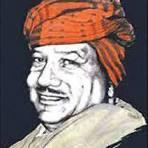
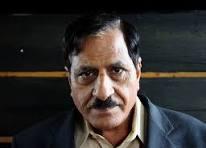
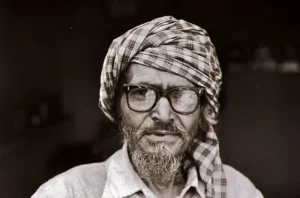

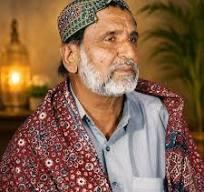
In Sindh, colonial power became inseparable from land and the authority of the wadera. Hyder Bux Jatoi left the security of government service and placed his writing at the service of the haris. His poetry and political pamphlets turned the tenant’s grievance into a demand for citizenship. Later, Shaikh Ayaz, Ustad Bukhari, Ibrahim Munshi and Sarwech Sujawali opposed enforced uniformity, cultural erasure and authoritarian rule. Ayaz’s poetry, as one assessment of his resistance writing observes, made love of language and land a force for political awakening.
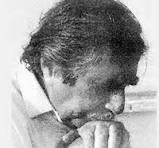
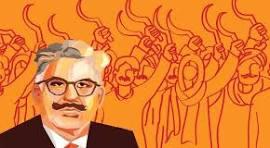
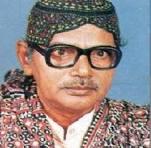
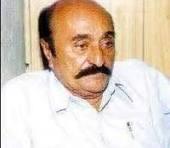
Pashto resistance offers another necessary correction. It cannot be reduced to the rifle or the romance of warfare. The Khudai Khidmatgar movement showed that courage could take the form of disciplined nonviolence. Ajmal Khattak joined poetry with political struggle, while Ghani Khan defended imagination and the free personality against regimentation.
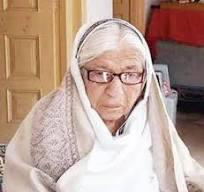
Alif Jana Khattaka is particularly important. Inspired by the movement led by Bacha Khan, she sent poems to Pakhtun during the 1940s and wrote of freedom and collective dignity. Her life, recalled by Dawn, unsettles the masculine version of frontier history. Women were not merely waiting at home for history to happen; they were writing its moral vocabulary.
Balochi oral literature gives us perhaps the sharpest image of collaboration. At a colonial gathering in Sibi, local sardars reportedly pulled the carriage of the British Agent to the Governor-General. Mulla Mazar Bangalzai answered with “Lat Sahib ki Bagghi”—“The Chariot of the Agent to the Governor-General”. The poem ridiculed not only the foreign official but also the local chiefs who turned servitude into ceremony.
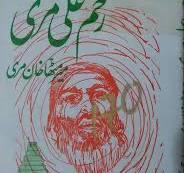
Raham Ali Marri, Muhammad Khan Marri and Giddu Doom likewise preserved memories of confrontation, sacrifice and betrayal. Javed Haider Syed’s study of Baloch resistance literature against the British Raj shows how oral poetry became an alternative archive. It remembered what colonial power wished to classify, contain or forget.
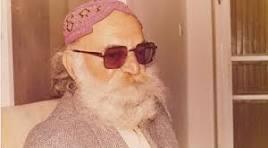
The later Balochi poets Muhammad Hussain Anqa, Azat Jamaldini, Zahoor Shah Hashmi and Akbar Barakzai will take the inquiry from military occupation to the defence of language and human dignity. They will also help us avoid a narrow reading of resistance. A language can be suppressed without being formally banned. It is enough to exclude it from education, administration, knowledge and opportunity until its speakers learn to regard their own voice as inadequate.
This series will therefore move across two historical moments. The first is resistance to British expansion and colonial rule. The second is resistance to colonial habits retained after independence: centralised authority, extractive land relations, cultural hierarchy, patriarchal control and the treatment of citizens as populations to be managed.
Poetry cannot replace organised politics, constitutional rights or material reform. It performs another indispensable task. It prevents power from controlling the meaning of events. It restores names to the anonymous, motive to the accused, courage to the defeated and moral choice to those told that submission was inevitable.
Our purpose is not to manufacture saints. These poets belonged to their periods and carried their contradictions. Their resistance must be examined critically, including its silences about caste, gender, class and other communities. Humanism demands more than admiration for the oppressed; it demands that oppression itself remain unacceptable, whoever exercises it.
Colonial power possessed armies, maps and archives. The people possessed memory, rhythm and the spoken word. The empire wrote reports declaring resistance extinguished. The song continued its journey.
[To be continued]
________________________________________________________________
Dr. Ikramul Haq, Advocate Supreme Court, writer, literary critic, Adjunct Faculty at Lahore University of Management Sciences (LUMS), member Advisory Board and Visiting Senior Fellow of Pakistan Institute of Development Economics (PIDE), holds an LLD in tax laws. He was full-time journalist from 1979 to 1984 with Viewpoint and Dawn. He also served Civil Services of Pakistan from 1984 to 1996.
We welcome your contributions! Submit your blogs, opinion pieces, press releases, news story pitches, and news features to opinion@minutemirror.com.pk and minutemirrormail@gmail.com